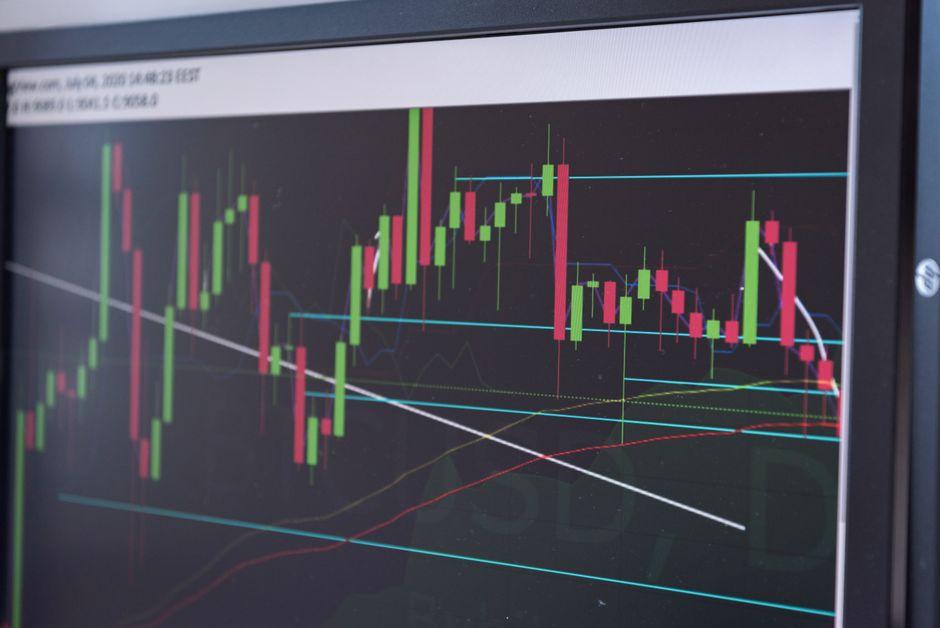
Forex Market Analysis for Exotic Pairs: USDTRY and USDZAR

Table of Contents
- Introduction
- What Is Exotic Pair Analysis?
- Why Exotic Pair Analysis Matters for Traders and Investors
- Core Concepts
- Step-by-Step Guide to Analyzing Exotics
- Practical Tips for Better Results
- Common Mistakes to Avoid
- Frequently Asked Questions
- Conclusion
Introduction
A sudden pivot in the Turkish Central Bank’s interest rate policy can send the USDTRY pair into a vertical ascent, erasing months of price consolidation in a matter of hours. For the average retail trader, this level of volatility is a nightmare; for the institutional researcher, it is the predictable outcome of diverging monetary policies and accelerating inflation spirals. When a trader moves away from the liquid safety of the EUR/USD, the fundamental rules of the foreign exchange market shift.
The primary struggle for most market participants is the tendency to apply major pair logic to exotic environments. They enter these trades expecting tight spreads, predictable technical breakouts, and deep liquidity. In pairs such as USDTRY or USDZAR, these expectations often lead to massive drawdowns and slippage that can deplete an account before a stop-loss order is even triggered.
Executing a successful strategy in these markets requires a sophisticated blend of geopolitical intuition and a strict adherence to liquidity mechanics. This guide establishes a professional framework for exotic pair analysis, focusing on the specific macroeconomic drivers that govern the Turkish Lira and the South African Rand.
What Is Exotic Pair Analysis?
Exotic pair analysis is the systematic evaluation of currency pairs where at least one of the currencies originates from an emerging economy or a nation with lower global trade significance. Unlike the majors, which involve the USD, EUR, JPY, or GBP, exotics are defined by lower trading volumes, significantly higher transaction costs, and a heavy dependence on local political stability.
Analyzing a pair like USDZAR requires a perspective that extends far beyond the price chart. A professional analyst must track the spot prices of gold and platinum, as South Africa is a primary global producer of these metals. A decline in global commodity demand often weakens the Rand, regardless of what technical indicators might suggest on a 15-minute timeframe. In these markets, the fundamental narrative almost always overrides the short-term technical setup.
Why Exotic Pair Analysis Matters for Traders and Investors
Many traders avoid exotics because the risk profile is inherently higher. However, the reward potential is often greater due to the sheer magnitude of the price swings. Institutional investors and hedge funds frequently utilize these pairs to hedge emerging market exposure or to capture high-yield carry trades.
Ignoring the specific drivers of an exotic pair is essentially gambling on noise. In the majors, a 1% move is a significant event that may trigger news headlines. In the USDTRY, a 1% move can occur during a lunch break. Without a dedicated analysis framework, it is impossible to distinguish between a temporary liquidity gap and a fundamental trend reversal.
Furthermore, exotics typically move in tight correlation with risk-on or risk-off sentiment. When the VIX spikes and global investors flee to safe-haven assets, the USD typically strengthens against emerging market currencies. Ignoring this macro-correlation means a trader might be fighting a global tide with a local technical strategy, a recipe for significant capital loss.
Interest Rate Differentials and Carry Trade Mechanics
The primary motivation for holding exotic pairs is the carry trade. This strategy involves selling a currency with a low interest rate, known as the funding currency, and buying one with a high interest rate, the target currency. The trader earns the difference between these two rates, referred to as the positive carry or swap.
Consider a scenario involving USDZAR. If the South African Reserve Bank maintains interest rates significantly higher than those of the Federal Reserve, traders may go long on the ZAR to collect the daily rollover interest. While this appears lucrative, it often creates a crowded trade. When market sentiment shifts or volatility increases, participants rush to close their long positions simultaneously. This leads to a violent devaluation of the exotic currency. This is the classic carry trade unwind, where the capital loss far exceeds the interest earned over the life of the trade.
Geopolitical Risk Premiums and Sovereign Credit Ratings
Exotic currencies serve as a real-time barometer for a nation’s perceived stability. Sovereign credit ratings from agencies such as Moody’s or S&P directly influence exchange rates. A downgrade in a country’s credit rating increases the risk premium that investors demand in exchange for holding that currency.
The USDTRY provides a clear example. When Turkey faces political instability or deviates from orthodox monetary policy—such as maintaining low rates despite skyrocketing inflation—the market applies a risk premium to the Lira. Consequently, the currency trades at a steep discount to its theoretical fair value. When performing exotic pair analysis, one must monitor the real interest rate, which is the nominal rate minus the inflation rate. If real rates are deeply negative, no amount of technical support will prevent a currency from sliding.
Liquidity Gaps and Wide Bid-Ask Spreads
Liquidity in the forex market is not uniform. In the EUR/USD, the spread between the bid and ask price is negligible. In USDTRY or USDZAR, the spread can widen significantly, particularly during the Asian session or during high-impact news events.
A concrete example of this occurs during a flash crash or a sudden policy announcement. The price of USDZAR might jump from 18.50 to 18.70 without any trades occurring at 18.60. This is a liquidity gap. If a trader’s stop-loss was set at 18.60, the broker may fill the order at 18.70, resulting in a loss much larger than anticipated. This slippage is a structural reality of exotic pairs and must be factored into position sizing and risk management.
Step-by-Step Guide to Analyzing Exotics
Step 1: Assess the Macro-Regime
Before opening a chart, determine the current volatility regime. You must identify if the market is in a risk-on phase, where investors are appetite-driven toward emerging markets, or a risk-off phase, where they flee to the safety of the USD. Monitor the DXY (US Dollar Index) and the VIX. If the VIX is climbing, the probability of a USD rally against exotics increases substantially.
Step 2: Analyze Central Bank Divergence
Compare the mandates and actions of the two central banks involved. For USDTRY, analyze the Turkish Central Bank’s (TCMB) inflation targets against the Federal Reserve’s dot plot. If the Fed is hiking rates while the TCMB remains hesitant or continues to cut, the fundamental pressure is overwhelmingly bullish for USDTRY. Identify the next scheduled meeting dates for both banks, as these represent the highest volatility windows for the pair.
Step 3: Identify Commodity and Trade Correlations
Many exotics are commodity currencies. For USDZAR, it is essential to track the price of gold, platinum, and coal. If these commodities are trending lower, the ZAR typically weakens. For other exotics, examine the terms of trade. If a country’s primary export is crashing, the currency will likely follow, regardless of the nominal interest rate.
Step 4: Map Liquidity and Volatility Zones
Switch to a daily or weekly chart to identify major psychological levels. In exotic pairs, round numbers, such as 20.00 or 30.00, act as significant magnets and barriers. Mark these zones clearly. Then, calculate the average daily range (ADR). If the ADR for USDZAR is 200 pips, a 50-pip stop-loss is far too tight and will likely be triggered by random market noise rather than a trend change.
Step 5: Calculate the Cost of Carry
Review the broker’s swap rates for the specific pair. If you are going long on a pair with a massive negative swap, you are paying a daily fee to maintain the position. This financial bleed can erode profits over time, especially in longer-term trades. You must decide if the expected price move is large enough to offset the cost of the carry.
Practical Tips for Better Results
To improve outcomes when trading exotics, consider the following professional adjustments:
Reduce your position size by 50% to 75% compared to the lot size you would use on a major pair. Because of the higher volatility, a smaller position provides the same risk exposure as a larger position in a more stable pair.
Use limit orders instead of market orders. This prevents you from being filled at the worst possible end of a wide bid-ask spread, which is common in emerging market currencies.
Monitor the real interest rate. Nominal rates are often a distraction; the actual difference between the central bank’s policy rate and the consumer price index (CPI) inflation is what drives long-term currency valuation.
Align your trades with the New York and London overlap. This is the window when liquidity is highest for exotics, which reduces the risk of extreme slippage and erratic price gaps.
Implement a volatility-adjusted stop, such as a multiple of the Average True Range (ATR), rather than a fixed pip amount. This allows the trade room to breathe based on the current market environment.
Stay alert for intervention news. Some central banks will manually enter the market to prop up their currency, creating sudden, violent spikes that move aggressively against the prevailing trend.
Common Mistakes to Avoid
Avoid these frequent pitfalls to preserve your capital:
Using tight stop-losses. In the world of exotics, a tight stop is essentially a donation to the market makers. The natural volatility of these pairs will trigger tight stops even during a correct directional move.
Ignoring the swap. Holding a high-cost negative carry position for several weeks can turn a winning trade into a net loss once the rollover fees are deducted.
Over-reliance on lagging indicators. Technical tools like the RSI and MACD often remain in overbought or oversold territory for weeks during a currency collapse. Relying solely on these can lead to premature entries against a strong trend.
Trading during low-liquidity windows. Trading USDTRY during the Sydney session exposes the trader to massive spreads and erratic price action that lacks institutional backing.
Neglecting geopolitical news. A single tweet, a political scandal, or a change in leadership in an emerging market can override six months of technical analysis in a matter of seconds.
How do I trade exotic pairs for beginners?
Beginners should start by observing these pairs on a demo account for at least one month. Focus specifically on the relationship between the USD and the exotic currency. Use very small position sizes and prioritize learning how the bid-ask spread fluctuates during high-impact news events before risking real capital. Understanding the rhythm of the market is more important than the initial profit.
What are the riskiest exotic currency pairs?
Pairs involving currencies from countries experiencing hyperinflation or unstable political regimes are the most volatile. USDTRY has historically been among the riskiest due to unconventional monetary policies. USDZAR is also high-risk because of its extreme sensitivity to global commodity prices and internal political volatility.
Why are spreads higher on USDTRY and USDZAR?
Spreads are a direct reflection of liquidity. Fewer banks and financial institutions are willing to take the opposite side of a trade in an exotic currency compared to the Euro or Yen. To compensate for the risk of holding a less liquid asset, liquidity providers charge a higher premium, which manifests as a wider spread.
When is the best time to trade exotic pairs?
The optimal time is during the overlap of the London and New York sessions. This period provides the highest trading volume and the tightest possible spreads for these pairs, which significantly reduces the cost of entry and exit.
Can I use standard technical analysis on exotic pairs?
Yes, but it is less reliable than in major pairs. Support and resistance levels still function, but they are frequently pierced by liquidity gaps. To increase the probability of success, you should combine technical analysis with fundamental drivers—such as commodity price shifts or central bank policy changes—to confirm the direction.
Is trading exotic pairs better than majors?
It is not necessarily better, but it offers different opportunities. Majors are suited for consistency and lower risk; exotics are designed for capturing large, directional moves and high-yield carry. Most professional portfolios utilize a mix of both to balance stability with aggressive growth.
Conclusion
The fundamental lesson of exotic pair analysis is that liquidity and geopolitics always override technical patterns. While a head-and-shoulders pattern might signal a reliable reversal in EUR/USD, in USDTRY, that same pattern can be completely ignored if the central bank continues to print currency to combat inflation. Success in these markets requires a shift in mindset: you are no longer just trading a chart; you are trading the economic viability of a nation.
Your next step should be to build a watchlist of three exotic pairs and track their correlation with a specific commodity or a G7 interest rate. Observe how they react during the New York open for two weeks before placing a live trade.
Trading exotic currencies involves a high degree of risk. Due to extreme volatility and frequent liquidity gaps, it is possible to lose more than your initial investment if using high leverage. Always employ a strict risk-management plan and never trade capital you cannot afford to lose.
*
Disclaimer: Trading Forex and exotic currency pairs carries a significant risk of loss. The analysis provided is for educational purposes and does not constitute financial advice. Past performance is not indicative of future results.
—
This article is for educational purposes only and does not constitute investment advice. Trading and investing carry risk of loss; never invest more than you can afford to lose.
Last reviewed: August 2026