


















































What Is Interest Rates: Essential Concepts Explained

Table of Contents
- Introduction
- What Is Interest and How Does It Work
- Why Interest Rates Matter for Traders and Investors
- Core Concepts
- Step-by-Step Guide: Calculating Interest and Applying It
- Practical Tips for Better Results
- Common Mistakes to Avoid
- Frequently Asked Questions
- Conclusion
Introduction
Interest rates touch every corner of personal finance. They’re embedded in your mortgage payment, your savings account yield, and the yield on that Treasury bond your portfolio holds. Yet despite their ubiquity, many investors operate with only a vague grasp of how interest actually works—and that gap can cost them dearly. A single percentage point on a 30-year mortgage translates to tens of thousands of dollars in total interest. The same difference can mean the gap between a profitable bond trade and a losing one.
Interest rates form the bedrock of modern finance. They dictate borrowing costs, determine investment returns, influence stock valuations, move currency exchange rates, and signal the overall health of the economy. For anyone serious about building wealth, understanding interest isn’t optional—it’s prerequisite knowledge.
This guide examines what interest is, how it’s calculated, and why it matters for every financial decision you make. You’ll learn the core concepts that separate informed investors from those who simply guess their way through financial markets.
What Is Interest and How Does It Work
At its most basic level, interest represents the cost of borrowing money—or the reward for lending it. When you take out a loan, interest is the extra amount you pay back on top of the original principal. When you deposit money in a savings account or purchase a bond, interest is the income you earn for allowing someone else to use your capital.
The interest rate expresses this cost or return as a percentage of the principal amount, typically calculated on an annual basis. A 5% interest rate on a $10,000 loan means you owe $500 per year for the privilege of borrowing that money.
Two fundamental mechanisms govern how interest accrues: simple and compound.
Simple interest calculates returns only on the original principal. If you deposit $10,000 at 5% simple interest, you earn $500 each year—consistently. After ten years, you have $15,000.
Compound interest calculates returns on the principal plus previously earned interest. Your earnings compound over time, creating a snowball effect. That same $10,000 at 5% compound interest grows to approximately $16,289 after ten years. The difference—$1,289—represents the power of compounding.
That difference becomes dramatic over longer periods. Over 30 years, the gap between simple and compound interest on a $10,000 principal at 5% would exceed $35,000. This is why compound interest has earned its reputation as a powerful force in finance—it works in your favor when you’re the lender, but works against you when you’re the borrower.
Why Interest Rates Matter for Traders and Investors
Interest rates influence virtually every financial market. They affect stock valuations through multiple channels: the cost of capital for companies, the discount rate used to value future earnings, and the relative attractiveness of dividend-paying stocks versus bonds.
When the Federal Reserve raises interest rates, bond prices typically fall and yields rise. This inverse relationship is fundamental to fixed-income trading. A trader holding a 10-year Treasury note sees the market value of that holding decline when rates climb, unless they hold to maturity and collect the stated coupon.
Currency markets respond sharply to interest rate differentials. The currency of a country with higher rates tends to appreciate against currencies from countries with lower rates, as investors seek better returns on denominated assets. This dynamic explains why forex traders watch central bank policy meetings so closely.
For individual investors, interest rates determine the cost of mortgages, auto loans, and credit card debt. They determine the yields on savings accounts, certificates of deposit, and government bonds. A 30-year mortgage at 6.5% costs approximately $68,000 more in total interest compared to a 5.5% rate on a $300,000 loan. That single percentage point represents a significant portion of most household budgets.
Ignoring interest rates means making financial decisions without understanding the true cost of borrowing or the real return on investments. Every informed investor must grasp these concepts.
Compound Interest and the Time Value of Money
Compound interest is the mechanism that makes money grow exponentially over time. Each period’s interest earns interest in subsequent periods, creating a compounding cycle that accelerates wealth accumulation. The formula for compound interest is A = P(1 + r/n)^(nt), where A represents the final amount, P is the principal, r is the annual rate expressed as a decimal, n is the number of compounding periods per year, and t is the time in years.
The time value of money is the principle that a dollar today is worth more than a dollar tomorrow. This concept underlies all interest calculations. Money available now can be invested and earn returns, making it more valuable than the same amount received later.
Consider an investor deciding between receiving $10,000 now versus $12,000 in two years. At a 5% annual compound rate, the $10,000 invested today grows to $11,025 after two years. The $12,000 received in two years isn’t enough to compensate for waiting—but $13,000 might be. Understanding this calculation helps investors evaluate lump sums versus annuity payments, pension options, and delayed compensation packages.
Federal Reserve Monetary Policy and the Federal Funds Rate
The Federal Reserve, America’s central bank, sets the target for the federal funds rate—the interest rate at which banks lend reserves to each other overnight. This rate influences virtually all other interest rates in the economy, from mortgage rates to savings account yields.
The Fed adjusts monetary policy to pursue its dual mandate: maximum employment and stable prices. When inflation runs too hot, the Fed raises rates to cool the economy. When growth stalls, it lowers rates to stimulate borrowing and spending.
These decisions ripple through markets. When the Fed chair announces a rate change, stock markets often fluctuate, bond yields rise or fall accordingly, and the dollar typically strengthens or weakens against other currencies. Traders position themselves ahead of Fed meetings, trying to anticipate policy moves and adjust their portfolios accordingly.
The Fed’s policy rate isn’t the only tool it uses. Quantitative tightening, forward guidance, and reserve requirements all influence interest rates and credit conditions. But the federal funds rate remains the primary lever—and the one market participants watch most closely.
The Yield Curve and Its Relationship to Economic Expectations
The yield curve plots interest rates across different maturities for debt of similar credit quality—typically U.S. Treasury securities. It shows what the market expects for future interest rates and economic growth, making it one of the most closely watched indicators in finance.
A normal yield curve slopes upward: longer-term bonds yield more than short-term bonds because investors demand compensation for holding longer-dated securities, which carry more uncertainty over time.
An inverted yield curve slopes downward: short-term rates exceed long-term rates. This typically signals that investors expect economic weakness or lower rates in the future. Historically, inverted yield curves have preceded recessions—though the timing has varied significantly between cycles.
A flat yield curve occurs when short-term and long-term rates converge. This often happens during transitions in monetary policy, when the market is uncertain about future direction.
Traders analyze the yield curve’s shape to gauge economic expectations and position accordingly. A steepening curve might signal growing inflation concerns; a flattening curve might indicate the market expects the Fed to cut rates. These insights inform decisions across stocks, bonds, and currencies.
Real Versus Nominal Interest Rates and Inflation Adjustment
The nominal interest rate is the stated rate on a loan or bond—the number you see advertised. The real interest rate adjusts for inflation, showing the actual purchasing power gain or loss.
The relationship is expressed in the Fisher equation: real rate approximately equals nominal rate minus expected inflation. If a savings account pays 4% nominal interest but inflation runs at 3%, your real return is approximately 1%.
Understanding real rates matters enormously for investors. During high-inflation periods, nominal returns can be misleading. A bond paying 6% looks attractive until you realize inflation is 8%—you’re losing purchasing power in real terms.
Central banks target real interest rates when setting policy. They want the real rate to be positive enough to discourage excessive borrowing while keeping nominal rates low enough to encourage investment. This balancing act defines much of monetary policy decision-making.
For investors, comparing real returns across different assets and time periods reveals true performance. A Treasury bond yielding 5% during a 2% inflation environment offers a better real return than a corporate bond yielding 7% during 6% inflation.
Step 1: Identify the Type of Interest and Compounding Frequency
Before calculating interest, determine whether you’re working with simple or compound interest. Most savings products, loans, and bonds use compound interest. Some installment loans use simple interest.
Next, identify the compounding frequency—how often interest is calculated and added to the balance. Annual compounding adds interest once per year. Monthly compounding adds it twelve times per year. Daily compounding adds it 365 times per year.
More frequent compounding generates more interest. A loan with monthly compounding will cost slightly more than one with annual compounding at the same stated rate. Always ask about compounding frequency before signing any loan or opening any savings product.
Step 2: Apply the Correct Formula
For simple interest: Total Interest = Principal × Rate × Time
For compound interest: Use the formula A = P(1 + r/n)^(nt) to find the final amount, then subtract the principal to find total interest earned or paid.
Most financial calculators and spreadsheet software can perform these calculations. Many online calculators handle the math automatically. What matters is understanding what you’re calculating and why.
For example, to find the effective annual rate (EAR)—the true annual cost or return including compounding—use: EAR = (1 + r/n)^n – 1. A credit card charging 20% annual interest, compounded monthly, actually charges an EAR of approximately 21.9%.
Step 3: Compare Rates Using APR and APY
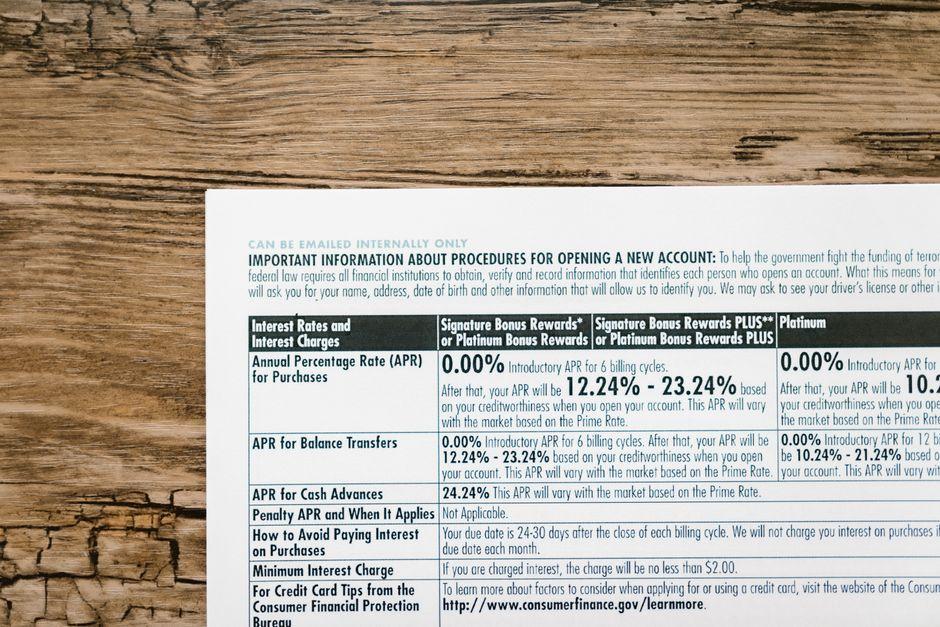
The Annual Percentage Rate (APR) and Annual Percentage Yield (APY) both express the cost or return of borrowing or saving money, but they serve different purposes.
APR represents the yearly cost of borrowing, including fees but excluding compounding. It’s useful for comparing loan costs because it shows the stated interest rate plus upfront charges, expressed as a percentage.
APY includes the effect of compounding, showing your actual annual return. It’s the figure to use when comparing savings products, because it reveals what you’ll really earn over the course of a year.
A savings account might advertise 4.5% APY but calculate interest monthly. A loan might list 6% APR with monthly compounding. Understanding these distinctions prevents surprises and enables accurate comparisons between financial products.
Practical Tips for Better Results
When comparing loans, always use APR rather than the stated rate—this accounts for fees and gives you the true annual cost of borrowing.
For savings and investments, use APY to compare true returns across products with different compounding frequencies. A savings account with monthly compounding will slightly outperform one with the same nominal rate but annual compounding.
Lock in higher rates when possible. If you can secure a multi-year certificate of deposit or bond at today’s rates, you’ll maintain that return even if market rates fall later.
Consider the real interest rate, not just the nominal rate, when making long-term investment decisions. Inflation erodes purchasing power over time, and focusing only on stated rates can lead to disappointing real returns.
Pay attention to the yield curve shape. A steepening curve has different implications for your bond portfolio than a flattening or inverting curve. Understanding these dynamics helps you position appropriately for different economic scenarios.
Understand that mortgage rates are not the same as the Federal Reserve funds rate—mortgage rates follow long-term Treasury yields, which respond to economic expectations and inflation forecasts more than Fed policy directly.
Review your debt portfolio during interest rate cycles. Refinancing high-rate debt when rates fall can save thousands of dollars in interest payments over the life of the loan.
Common Mistakes to Avoid
Ignoring compounding frequency is a common error. A loan with 12% interest compounded monthly costs more than one with 12% compounded annually. The difference may seem small in monthly payments, but it adds up significantly over the loan term.
Confusing APR with APY leads to incorrect conclusions about the true cost or return. Using the wrong metric means you might choose a worse loan or a inferior savings product without realizing it.
Focusing only on nominal returns blinds you to real performance. A 10% return during 8% inflation is only a 2% real return—far less attractive than it initially appears.
Assuming Fed rate cuts immediately lower mortgage rates is a mistake. Mortgage rates follow long-term bond yields, which reflect market expectations for future rates and inflation. The relationship between Fed policy and mortgage rates is indirect and can involve significant lags.
Ignoring the impact of interest rates on stock valuations can hurt your portfolio. Higher rates increase the discount rate used in valuation models, typically lowering stock prices—especially for growth stocks with most of their earnings expected far in the future.
Taking on too much debt without considering how rising rates might affect monthly payments is dangerous. Adjustable-rate loans can become unaffordable when rates climb, potentially leading to default.
What is interest and how does it actually work?
Interest is the percentage of principal charged for borrowing money or paid for lending it. When you borrow, interest increases the total amount you repay. When you save or invest, interest increases your returns over time. Interest rates are expressed as annual percentages and can be calculated using simple interest (principal only) or compound interest (principal plus previously earned interest).
How do interest rates affect the stock market?
Interest rates affect stocks through multiple channels. Higher rates increase borrowing costs for companies, potentially reducing profits and investment spending. Rates also serve as discount rates in valuation models—higher rates reduce the present value of future earnings, lowering stock prices. But the relationship isn’t always straightforward; some sectors like financials benefit from higher rates because they can charge more for loans.
What causes interest rates to go up or down?
Interest rates rise when central banks tighten monetary policy to combat inflation, and fall when central banks ease policy to stimulate economic growth. Market forces also influence rates: when demand for credit is high, rates tend to rise. When demand is low, rates fall. Inflation expectations, government debt levels, and global capital flows all affect the interest rate environment.
Are high interest rates good or bad for investors?
It depends on your perspective and asset allocation. For savers and bond investors, higher rates mean better returns on fixed-income investments. For borrowers, high rates mean higher costs. Stock investors face a more complex picture—moderate rate increases often reflect a healthy economy, but rapid increases can hurt equity valuations. The impact varies significantly depending on your specific investments and time horizon.
What is the difference between APR and APY?
APR (Annual Percentage Rate) represents the yearly cost of borrowing including most fees but excluding compounding. It’s the standard metric for comparing loan costs. APY (Annual Percentage Yield) includes the effect of compounding and represents your actual annual return on savings or investment products. Always use APR when comparing loans and APY when comparing savings accounts to get the true picture.
How do I calculate simple interest vs compound interest?
Simple interest: multiply principal by rate by time (P × r × t). For example, $10,000 at 5% for 3 years earns $1,500 in total interest. Compound interest: use A = P(1 + r/n)^(nt), where n is the number of compounding periods per year. The same $10,000 at 5% compounded annually for 3 years grows to $11,576—a $1,576 total return. The difference grows substantially over longer periods.
Conclusion
Interest rates are not just a number on a loan document or a savings account statement. They represent the price of money itself, and understanding how they work is fundamental to making informed financial decisions.
The key takeaways are these: compound interest works powerfully over time, so start investing early and minimize high-interest debt. The Federal Reserve’s decisions ripple through every market, making central bank policy essential to watch. The yield curve reflects collective expectations about future rates and economic growth, providing valuable signals for positioning your portfolio. And always distinguish between nominal and real returns—inflation can quietly erode your purchasing power if you focus only on stated rates.
Your next practical step: review your current debt and savings. Check the interest rates you’re paying on any loans and the rates you’re earning on savings. Calculate what a 1% change would mean over the remaining life of your loans or the life of your investments. This simple exercise will reveal how much interest affects your financial life—and where you might improve your position.
Remember that interest rates will always fluctuate with economic conditions. No one can predict with certainty where rates will go next. What you can do is understand how they work, recognize their impact on your decisions, and position yourself to adapt when conditions change. That knowledge is what separates informed investors from those who simply react to headlines.
TradingIM Research Team
Reviewed by: Trading Analysis Department
Disclaimer: This article is for educational purposes only and does not constitute financial advice. All investments involve risk, including potential loss of principal. Consult a qualified financial professional before making investment decisions.
—
This article is for educational purposes only and does not constitute investment advice. Trading and investing carry risk of loss; never invest more than you can afford to lose.
Last reviewed: August 2026