











































What Is Index Funds and Why It Matters for Traders

Table of Contents
- Introduction
- What Is an Index Fund?
- Why Index Funds Matter for Traders and Investors
- Core Concepts
- Step-by-Step Guide to Getting Started
- Practical Tips for Better Results
- Common Mistakes to Avoid
- Frequently Asked Questions
- Conclusion
Introduction
The average actively managed equity fund charges roughly ten times more in annual fees than an index fund tracking the same benchmark. Over a thirty-year career, that cost differential can erase tens of thousands of dollars from a portfolio. Most traders and investors enter the market looking for an edge, spending hours researching individual stocks, chasing hot sectors, or paying premium fees for professional management. Yet study after study shows that the majority of active managers fail to beat their benchmark indices over meaningful time horizons.
Index funds solve this problem directly. By owning a slice of every company in a broad market index, they deliver market-matching returns at a fraction of the cost. This article explains what index funds are, how they work mechanically, and why they represent a strategic tool that every trader should understand—whether you use them as a core holding or a benchmark for measuring your own performance.
What Is an Index Fund?
An index fund is a pooled investment vehicle that aims to replicate the performance of a specific financial market index rather than select securities through active judgment. When you buy shares in an index fund, your money is combined with other investors’ capital and used to purchase a portfolio that mirrors the holdings of a chosen index, such as the S&P 500, which tracks the 500 largest U.S. companies by market capitalization.
The fund does not require a portfolio manager making buy and sell decisions based on research or market timing. Instead, it follows a passive rule-based approach: when a company is added to the underlying index, the fund buys it; when a company is removed, the fund sells it. This mechanical process keeps operating costs low and ensures the fund’s performance tracks its benchmark closely.
Consider a practical example. A trader invests $10,000 in a low-cost S&P 500 index fund rather than attempting to pick individual stocks. After five years, assuming the S&P 500 has averaged approximately 10% annual returns, the $10,000 investment would grow to roughly $16,105 before fees. An actively managed fund charging a 1% higher expense ratio would need to beat the index by that same 1% just to match it—something most active managers fail to do consistently over a five-year period.
Why Index Funds Matter for Traders and Investors
Index funds matter because they address the two biggest obstacles facing most investors: costs and consistency. The investment industry operates on a simple arithmetic problem that works against active management. If the market returns 10% on average, and active managers collectively must underperform by the amount they charge in fees, then passive investors as a group will always outperform active investors as a group before any performance differential from skill is even considered.
Traders who ignore index funds miss a baseline for evaluating their own performance. If you cannot consistently beat a low-cost index fund after accounting for taxes, trading commissions, and the time value of your research hours, the rational choice is to simplify and hold the index. Many sophisticated traders use index funds as core positions while allocating a smaller portion of their capital to higher-conviction active bets.
The tax efficiency of index funds adds another dimension. Because they trade only when the underlying index changes composition, they generate fewer taxable events than actively managed funds, which turn over their portfolios frequently in pursuit of outperformance. For investors in taxable accounts, this structural advantage often translates into meaningful after-tax returns.
Market Capitalization Weighting
Most broad-market index funds weight their holdings by market capitalization, meaning larger companies represent a larger percentage of the portfolio. In a market-cap-weighted index like the S&P 500, Apple, with a market value in the hundreds of billions, will represent roughly 7% of the index, while a company worth $10 billion represents a much smaller slice.
This weighting methodology has implications for your portfolio. When large-cap stocks rally, the index fund benefits disproportionately. When they decline, the drag is equally significant. Some index funds use alternative weighting schemes—equal-weighting each stock, or weighting by fundamentals like book value or sales—but market-cap weighting remains the dominant approach because it requires the least intervention and closely represents the aggregate market.
Expense Ratio and Management Fees
The expense ratio represents the annual cost of owning the fund, expressed as a percentage of your assets. It covers the fund’s operating expenses, including management fees, administrative costs, and trading expenses. A typical expense ratio for a large-cap U.S. equity index fund runs between 0.03% and 0.15%, while actively managed equity funds often charge 0.75% to 1.5% or more.
These numbers seem small, but their impact compounds dramatically over time. On a $100,000 portfolio, a 1% annual fee costs you $1,000 per year versus $100 for a 0.1% expense ratio. Over twenty years, the difference can exceed $25,000 in lost compounding. Always check the expense ratio before buying any fund.
Passive Replication vs. Sampling Methodology
Index funds employ different methods to track their benchmarks. Full replication means the fund owns every stock in the index in proportion to its weight. This approach offers the tightest tracking but becomes impractical for very large indices with thousands of securities.
Sampling involves owning a representative subset of securities that mimics the index’s characteristics without holding every single component. This method reduces trading costs and works well for very broad indices like the total U.S. stock market, where owning thousands of stocks creates operational complexity. The tradeoff is slightly higher tracking error—the degree to which the fund’s returns deviate from the index it follows.
Capital Gains Distribution and Tax Efficiency
When index funds rebalance to match changes in their underlying indices, they may sell securities that have appreciated, triggering capital gains taxes for shareholders. But because index funds trade far less frequently than active managers, these distributions tend to be smaller and less frequent.
In taxable accounts, this structural efficiency is a meaningful advantage. You can also look at the fund’s tax-loss harvesting capabilities and turnover rate to gauge its tax efficiency. Funds tracking major indices like the S&P 500 typically exhibit turnover rates below 10%, compared to 50% or more for many active funds.
Tracking Error and Fund Performance
Tracking error measures how closely a fund follows its benchmark. It is calculated as the standard deviation of the difference between the fund’s returns and the index’s returns. Lower tracking error means the fund is doing a better job of replicating the index.
Several factors influence tracking error: the expense ratio (which creates a permanent drag against the index), sampling methodology, timing differences between index changes and fund trades, and cash holdings (which may sit idle awaiting investment). For most index funds tracking major U.S. indices, tracking error is minimal—often below 0.1% annually.
Step 1: Define Your Investment Objective
Before selecting an index fund, clarify what market exposure you want. Are you targeting large U.S. companies, the entire U.S. stock market, international stocks, bonds, or a combination? Your objective determines which index and fund type matches your goals. A young investor building long-term wealth might choose a total stock market fund, while someone nearing retirement might allocate more toward bond index funds.
Step 2: Research Available Funds
Compare funds that track your chosen index on three criteria: expense ratio, tracking error, and fund size. Lower expenses and tighter tracking are always better. Larger funds tend to have more liquidity and lower per-share trading costs. Use screener tools from your brokerage to filter by asset class, expense ratio, and minimum investment.
Step 3: Open a Brokerage Account
You will need a brokerage account to purchase index funds. Look for a broker that offers commission-free trading on the funds you want, low account minimums, and strong research tools. Many online brokers now offer their own line of index funds with exceptionally low expense ratios.
Step 4: Execute Your Purchase
Once funded, place your order. Most investors use dollar-cost averaging—investing a fixed dollar amount at regular intervals, even if market conditions fluctuate—to smooth out volatility and avoid the temptation of market timing. For example, contributing $500 monthly into a total stock market index fund during volatile conditions means you buy more shares when prices drop and fewer when prices rise, lowering your average cost over time.
Step 5: Monitor and Rebalance
Index funds require far less maintenance than active portfolios, but you should still review your asset allocation annually. As markets move, your original allocation will drift from your target. Rebalance by directing new contributions to underweight asset classes or trimming overweight positions to maintain your intended risk profile.
Practical Tips for Better Results
Prioritize funds with expense ratios below 0.20% for equity exposure. The difference between 0.03% and 0.25% compounds significantly over decades.
Consider using tax-advantaged accounts like IRAs or 401(k)s for actively traded positions, reserving taxable accounts for the most tax-efficient index funds.
Examine the fund’s turnover rate. Lower turnover means fewer taxable distributions and better after-tax performance in taxable accounts.
Look beyond the largest names. Some excellent index funds track smaller segments of the market, such as growth stocks, value stocks, or specific sectors, that may complement a core holding.
Understand that all index funds are not created equal. Two funds tracking the S&P 500 may have slightly different methodologies, expense ratios, and tracking误差, producing marginally different results.
Use index funds as a performance benchmark for any active trading you do. If your strategy cannot consistently beat a low-cost index fund after costs, the index is the smarter choice.
Check the fund’s creation and redemption process. Some index funds are structured as ETFs, which trade like stocks throughout the day, while others are mutual funds that price once per day.
Common Mistakes to Avoid
Chasing the lowest expense ratio without considering whether the fund tracks an appropriate index for your goals. A cheap fund tracking a volatile niche index may not suit your objectives.
Overlooking the tax implications of index fund distributions. Even low-turnover funds occasionally distribute capital gains when the index composition changes.
Assuming all index funds are identical. Methodology, tracking error, and cash holdings vary and can produce meaningful performance differences over time.
Ignoring the role of index funds in a broader portfolio. Some investors over-allocate to U.S. equity index funds and miss diversification benefits from international exposure and bonds.
Trying to time purchases based on short-term market movements defeats the purpose of index fund investing, which relies on consistency and compounding.
Failing to rebalance as your portfolio grows or your risk tolerance changes. A 100% equity allocation may not be appropriate at every life stage.
What is an index fund and how does it work?
An index fund is a mutual fund or exchange-traded fund designed to match the performance of a specific market index by holding the same securities in similar proportions. When you invest in one, your money is pooled with other investors and used to buy a diversified portfolio that moves with the broader market rather than attempting to beat it.
What are the best index funds for beginners?
For beginners, the most straightforward options are funds tracking major U.S. indices: a total stock market index fund provides exposure to the entire U.S. equity market, while an S&P 500 index fund offers exposure to the 500 largest U.S. companies. Both are highly liquid, low-cost, and require no research into individual stocks.
Can index funds lose money during a market crash?
Yes. Index funds hold the securities within their tracked index, so when the market declines significantly, the index fund declines as well. There is no protection against market downturns. The difference from active management is that you bear the full market risk rather than underperforming it by an additional fee drag.
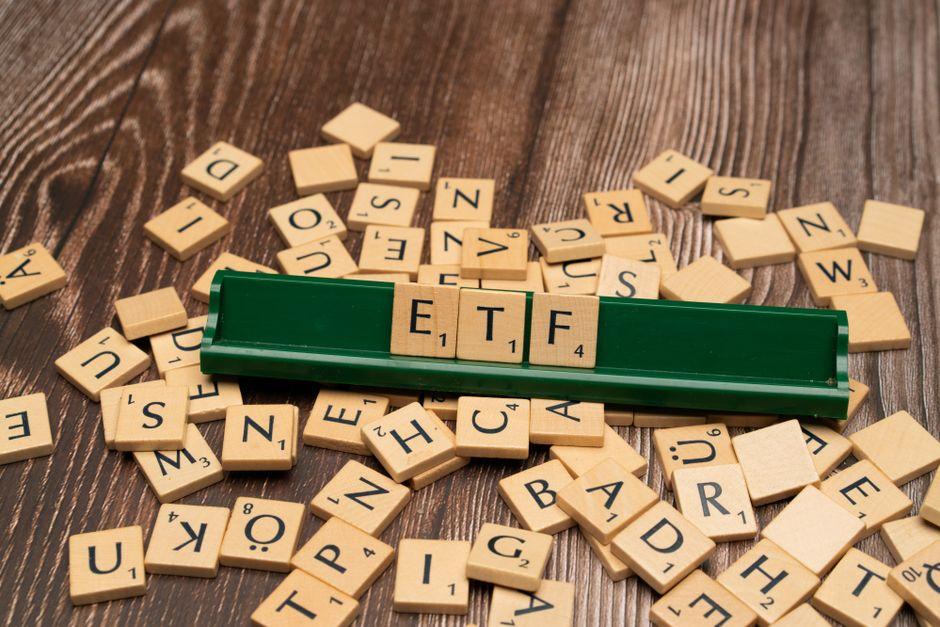
What is the difference between index funds and ETFs?
Both index funds and ETFs can track the same indices, but they differ in how they trade. Index mutual funds price once per day at net asset value and are bought or sold through the fund company. ETFs trade throughout the day on an exchange like stocks, allowing for limit orders, stop-losses, and intraday trading. Many ETFs have lower expense ratios than their mutual fund counterparts.
How much money do I need to start investing in index funds?
Some index funds have no minimum investment beyond the share price, while others require $1,000 or more to open a position. Many brokers now offer fractional share purchasing, allowing you to invest any dollar amount in any fund, making it possible to start with as little as $1.
Do index funds pay dividends?
Yes. Index funds that track equity indices receive dividends from the underlying holdings and pass them through to shareholders. The dividend yield reflects the weighted average dividend yield of the index components. Some funds distribute dividends quarterly, while others reinvest them automatically through a dividend reinvestment plan.
Conclusion
Index funds are not a magic solution—they deliver market returns, not outperformance. But that is precisely their value. By minimizing costs, providing broad diversification, and eliminating the guesswork of stock selection, they give traders and investors a structural advantage that compounds over time. The evidence is unambiguous: over most long periods, the majority of active managers fail to outperform low-cost index funds after fees.
Your next step is straightforward. Identify the index or indices that match your investment objectives, research the lowest-cost funds tracking those indices, and establish a consistent contribution schedule. Whether you use index funds as your primary investment vehicle or as a benchmark against which you measure active trades, understanding this mechanism is essential for building lasting wealth.
Remember that all investments carry risk, including the possible loss of principal. Past performance does not guarantee future results. Index funds track market indices, so your returns depend entirely on how the broader market performs. Always consider your risk tolerance and investment time horizon before making decisions.
—
This article is for educational purposes only and does not constitute investment advice. Trading and investing carry risk of loss; never invest more than you can afford to lose.
Last reviewed: August 2026