


















































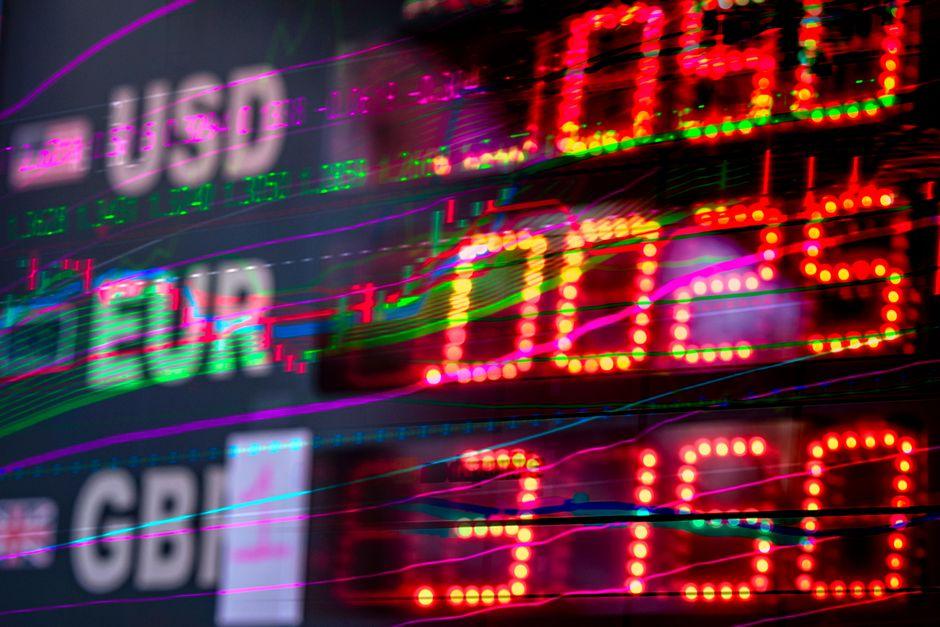
Key Catalysts Moving Forex Markets Today: A Trader’s Guide

ARTICLE_AUTHOR: Editorial Desk
Table of Contents
- Introduction
- What Are Key Catalysts in Forex?
- Why Catalysts Matter for Traders and Investors
- Core Concepts
- Step-by-Step Guide: Reacting to a Catalyst
- Practical Tips for Better Results
- Common Mistakes to Avoid
- Frequently Asked Questions
- Conclusion
Introduction
Key catalysts forex sits at the centre of this guide, and understanding how they work changes the way any serious participant approaches the market.
A Bloomberg terminal lights up at 8:30 a.m. New York time. US non-farm payrolls print hot, USD/JPY jumps 120 pips in minutes, and a retail trader who placed a stop the wrong side of the news is out before lunch. This is the daily reality of foreign exchange: a market that never sleeps, driven by a relatively small number of recurring catalysts that traders ignore at their peril. If you have ever wondered why EUR/USD suddenly rips lower after an ECB press conference, or why the yen weakens the moment US Treasury yields climb, you are already asking the right question.
The key catalysts moving forex today are not mysterious. They are scheduled, telegraphed, and observable: central bank interest rate decisions, forward guidance, inflation prints like CPI and PCE, labour market data, and the steady drumbeat of geopolitical shocks that can flip a pair in seconds. What separates a struggling trader from a consistent one is rarely access to information. The calendar is free. The edge is the ability to interpret the catalyst, anticipate the second-order move, and manage risk around the release.
This guide is a working playbook. It explains the six mechanisms that move the world’s most-traded currency pairs, gives you a step-by-step method for reacting when data hits, and flags the mistakes that turn a trader’s edge into a liability. Read it before the next release, not after.
What Are Key Catalysts in Forex?
A key catalyst in forex is any scheduled or unscheduled event that materially changes the market’s expectation for a currency’s future path. That expectation is what moves price. Catalysts come in three broad forms: policy actions (rate decisions, balance sheet guidance, emergency interventions), economic data (inflation, employment, growth, surveys), and external shocks (geopolitical conflict, financial stress, commodity shocks, elections).
Consider a simple example. The US prints a core CPI reading that comes in above consensus. That single number forces traders to update their model of where the Federal Reserve will set the federal funds rate over the next six months. Higher expected rates push the dollar up against most G10 peers because higher-yielding currencies attract capital. The catalyst is the CPI print. The transmission mechanism is the rate path. The price action is the dollar strengthening. Understanding that chain is the job.
Why Catalysts Matter for Traders and Investors
For a day trader, missing a catalyst can mean missing the only meaningful volatility of the session. For a swing trader, misreading a catalyst can lock you into a position that the market has already abandoned. For a corporate treasurer hedging EUR receivables, ignoring catalysts means paying a wider spread on a day when liquidity has thinned. For a portfolio manager, catalyst awareness is what keeps a long equity position from being blindsided by a sudden dollar squeeze that tightens financial conditions globally.
The deeper reason catalysts matter is that forex is a relative-pricing market. Every long EUR is implicitly a short USD, and vice versa. A catalyst in one economy instantly forces a repricing against its counterpart. When the ECB cuts rates while the Fed holds, EUR/USD does not just fall because the euro is weaker. It falls because the relative yield advantage of holding dollars has widened. That is why currency traders obsess over data: they are not predicting economies, they are predicting relative policy.
Core Concepts
Central Bank Interest Rate Decisions and Forward Guidance
Rate decisions are the highest-impact recurring catalyst in forex. A 25 basis point move in a benchmark policy rate is large enough to reprice a currency pair by 50 to 150 pips within minutes, depending on how surprising the decision is. The decision itself is only half the story. The press conference and the accompanying statement carry the forward guidance, the central bank’s signal about what comes next. Markets trade expectations of future rates, not just the current setting.
Picture the ECB cutting rates by 25 basis points and Christine Lagarde using the press conference to say the disinflation process is on track and the Governing Council “is not committing to a pause.” EUR/USD drops 80 pips in minutes as the cross tests the 1.0700 support. The reason is not just the cut itself. The market had already priced some of that. The real driver is the widening of the US-German 2-year yield spread, which now favours dollar-denominated carry. The catalyst was the rate cut plus the language. The mechanism was the relative yield shift.
Inflation Prints (CPI/PCE) and Real Yield Differentials
Inflation data ranks second only to rate decisions in driving FX volatility. The Federal Reserve’s preferred gauge is the PCE deflator, but markets react most violently to the CPI release because it lands first in the month. A hot core CPI print raises the probability of further Fed action; a soft print brings forward rate cuts. The dollar’s reaction depends on which side of consensus the print lands and on the broader economic narrative.
Real yield differentials, the gap between nominal bond yields and inflation expectations, drive currency flows more cleanly than nominal yields alone. If US 10-year real yields rise while German or Japanese real yields are anchored, the dollar tends to strengthen against the euro and yen. In one recent session, USD/JPY spiked sharply after a hotter-than-expected US core CPI print of 0.4% month-over-month forced traders to reprice Fed hold expectations, while the yen weakened as Bank of Japan policy divergence widened. That single print shifted the rate-differential path by several months in traders’ models.
Non-Farm Payrolls and the Labour Market Surprise Index
The monthly US non-farm payrolls release is the single most-watched economic data point in forex. Even a small surprise, payrolls coming in 50,000 above or below consensus, can move EUR/USD, USD/JPY, and the dollar index by 50 to 100 pips. The reaction is amplified when the report aligns or contradicts the prevailing policy narrative. A strong jobs report during a Fed cutting cycle is far more bearish for the dollar than the same report during a hiking cycle, because it suggests the Fed will pause.
Traders also track the Labour Market Surprise Index, which aggregates the gap between consensus forecasts and actual outcomes across multiple US data series. When surprises skew positive, the dollar tends to strengthen; when they skew negative, it weakens. No single release tells the full story. The cumulative surprise matters more than any one number.
Risk-On, Risk-Off Sentiment and the Dollar Smile
Currency markets respond not just to data but to global risk appetite. The “dollar smile” theory captures the dollar’s tendency to strengthen in two regimes: extreme fear, when global investors flee to US Treasuries and dollar liquidity, and extreme exuberance, when US growth outpaces the rest of the world. In between, during moderate growth, the dollar tends to weaken as capital seeks higher yields elsewhere. Watching equities, credit spreads, and the VIX together tells you which side of the smile the market is on.
A risk-off shock, a sudden banking failure, a sovereign downgrade, an escalation in a trade war, typically sends the Japanese yen, Swiss franc, and US dollar higher against risk-sensitive currencies like the Australian and New Zealand dollars. A risk-on environment, signalled by rising S&P 500 futures and tightening credit spreads, often does the opposite: commodity currencies rally and funding currencies like the yen weaken.
Geopolitical Shocks and Safe-Haven Flows
Geopolitical events are the wildest of catalysts because they are unpriced until they happen. Wars, sanctions, election surprises, and diplomatic crises can flip a currency pair in seconds. The 2022 yen move after the Bank of Japan surprised with a yield curve control shift is a textbook example: a single policy decision, announced in a thin Asian session, sent USD/JPY swinging hundreds of pips within hours. The yen had been a safe-haven favourite. Once the BoJ signalled a turn, the carry trade that funded yen weakness unwound violently.
Safe-haven flows follow a hierarchy. In acute crises, gold, US Treasuries, the Swiss franc, and the Japanese yen attract capital. In slower-burning crises, the dollar tends to dominate because of US Treasury market depth and dollar funding liquidity. The trader who understands the difference between a fast shock and a slow grind positions accordingly: tight stops on the former, structural hedges on the latter.
Carry Trade Mechanics and Rate-Differential Compression
The carry trade is the practice of borrowing in a low-yielding currency to buy a higher-yielding one, profiting from the interest rate differential. When the Bank of Japan held rates near zero for years, the yen was the world’s funding currency; traders sold yen to buy Australian dollars, Mexican pesos, and emerging market debt. When differentials compress, because the high-yielder cuts, or the funder hikes, or both, the carry trade unwinds. That unwinding can be violent.
Rate-differential compression is the most common precursor to sharp FX reversals. If the ECB cuts twice while the Fed holds steady, the EUR-USD two-year spread narrows. Carry trades funded in euros and invested in dollars lose their edge, and leveraged positions are closed. The same dynamic played out across multiple cycles when central banks globally moved toward a synchronised easing phase, compressing differentials across the entire G10 complex.
Step-by-Step Guide: Reacting to a Catalyst
Step 1 — Map the Calendar Before the Session Opens
A professional trader’s first task is not to predict the data. It is to identify which releases are scheduled, what time they hit, and where consensus sits. Build a watchlist of pairs with the highest sensitivity to the release: USD/JPY and DXY for NFP, EUR/USD for ECB and US CPI, AUD/USD for Chinese and Australian data. Position size should already reflect the risk of the release before it arrives.
Step 2 — Define the Scenarios and the Asymmetry
For each release, write down three scenarios: a hot print, an in-line print, and a soft print. Assign an expected reaction for each. The asymmetry is what matters: which scenario is the market least prepared for? That is where the biggest move will come from. A consensus that has drifted hawkish in the days before a CPI release creates a downside skew. A soft print will hurt the dollar more than a hot print helps it.
Step 3 — Trade the Reaction, Not the Prediction
Most retail traders lose money on event days because they try to predict the number. Professionals do not. They wait for the release, watch the first one to three minutes of price action to identify the market’s interpretation, and then trade in the direction of the initial impulse, or fade it if liquidity is thin and the move looks exhausted. The stop is placed just outside the post-release range. The target is the next obvious technical level.
Step 4 — Manage the Position After the Spike
The first 30 minutes of price action are often the wildest and least informative. After the spike, the market settles into a new range that reflects the updated policy path. Trim position size after a successful scalp, and reassess whether the catalyst has changed the broader trend or just created noise. If the move aligns with a longer-term narrative, a Fed pivot, a recession, a BoJ normalisation, consider letting the core position run with a trailing stop.
Practical Tips for Better Results
- Watch bond yields before the data, not after. The FX market often prices the move in the 10-year yield the moment consensus expectations shift. A bond market that has already moved tells you the FX move is partly priced in.
- Compare consensus to the whisper number. Off-the-record bank surveys often diverge from the published consensus and predict the surprise more reliably than the headline number itself.
- Use implied volatility to size the trade. One-week FX implied vol ahead of an ECB meeting tells you how much the market expects the euro to move. If vol is high, the bar for a surprise is already raised.
- Pay attention to the time of day. A CPI print at 8:30 New York hits a fully open London-New York overlap, with maximum liquidity. The same number released during the Asian session would move markets less because fewer participants are active.
- Track cross-currency flows. A weak euro against the dollar plus a strong euro against the yen tells you the move is dollar-driven, not euro-driven. That distinction matters for follow-through.
- Watch the dot plot and the summary of economic projections. Forward guidance buried in central bank documents often matters more than the headline rate decision.
- Keep a catalyst journal. After each major release, write down what you expected, what happened, and what you did. Six months in, the journal reveals patterns in your own behaviour that no screen can show.
Common Mistakes to Avoid
- Trading into a release without a plan. A surprise release with no defined stop or scenario is a coin flip with a spread. The market is not fooled by conviction; it is moved by liquidity.
- Ignoring the second derivative. A strong NFP print matters less if the previous two months were revised sharply lower. Headline numbers tell you what happened. Revisions tell you what is really changing.
- Confusing the catalyst with the cause. A 100-pip dollar move on hot CPI is not caused by CPI. It is caused by repricing of the Fed path. Trade the repricing, not the headline.
- Overreacting to one release. A single data point is noise. Trends in inflation, employment, and growth require multiple confirming signals. A trader who flips position on every release gets chopped up.
- Forgetting the cross-rates. A weak yen against the dollar is not always a dollar story. If the yen is weak against every G10 currency, the BoJ is the catalyst, not the Fed.
- Holding through the press conference. The decision is priced in seconds. The press conference is where forward guidance is delivered, and that is where the bigger repricing happens.
Frequently Asked Questions
What are the key catalysts moving forex markets today?
The key catalysts moving forex markets today are central bank interest rate decisions and forward guidance, inflation prints such as CPI and PCE, labour market data including non-farm payrolls, geopolitical shocks, and shifts in global risk sentiment. The relative weight of each catalyst changes with the macro cycle: in a hiking cycle, rate decisions dominate; in a cutting cycle, inflation prints take the lead. Most days, two or three catalysts interact.
How do central bank rate decisions impact currency pairs?
Rate decisions impact currency pairs by changing the expected return on holding that currency. Higher rates attract capital inflows, strengthening the currency; lower rates do the opposite. The announcement itself moves price in the first minute. The press conference and forward guidance drive the move over the following hour. Surprise decisions move markets more than expected ones, and the size of the move scales with the divergence between the decision and market consensus.
Why does US non-farm payrolls data move the dollar so much?
US non-farm payrolls move the dollar because employment is the cleanest signal of US economic momentum, and economic momentum drives Fed policy. A strong payrolls print suggests the Fed can hold rates higher for longer, widening yield differentials in favour of the dollar. A weak print raises recession odds and brings forward rate cuts, weakening the dollar. The reaction is amplified by the global role of the dollar: a repricing of US rates affects capital flows across every asset class.
When do economic releases create the biggest forex volatility?
The biggest volatility comes from releases that land at the intersection of high consensus attention, surprise potential, and full market liquidity. The first Friday of each month at 8:30 New York time is the canonical example. Releases during the Asian session, or on holidays, create smaller moves because fewer participants are active. The other volatility amplifier is sequencing: when a release confirms a trend the market has been pricing for weeks, the move is muted; when it contradicts consensus, the move is violent.
Can geopolitical news cause sudden forex market swings?
Yes. Geopolitical news is the most common source of one-day FX swings outside of major central bank decisions. Wars, sanctions, election surprises, and diplomatic crises can flip a currency pair in seconds because they cannot be priced in advance. The yen, Swiss franc, and US dollar typically benefit from safe-haven flows, while risk-sensitive currencies like the Australian and New Zealand dollars sell off. The harder part is not identifying the shock but sizing positions so a sudden move does not end your trading career.
Is the forex market driven more by data or by central bank policy?
Central bank policy drives the forex market more than any single data point, but data drives the policy. The chain runs: data prints shift the probability of policy actions, and policy actions move currency pairs. Traders who focus only on data miss the policy context; traders who focus only on policy miss the catalyst that will force the next policy move. The best approach is to map both, the calendar of releases and the calendar of central bank meetings, and watch for the points where the two interact.
Conclusion
The key catalysts moving forex today are not secrets. They are listed on every economic calendar, discussed on every macro desk, and repriced within seconds of release. What separates a profitable trader from a frustrated one is not access to the catalyst but the discipline to map it, size it, and react to it with a plan. The central bank decision, the CPI print, the payrolls surprise, the geopolitical shock, the carry trade unwind, each follows a recognisable pattern once you have seen it a few times. The work is to learn the pattern, write it down, and apply it the next time the calendar lights up.
The next practical step is simple: open a broker platform, pull up next week’s economic calendar, and identify the three highest-impact releases for the pairs you trade. For each, write a one-sentence scenario and a pre-defined stop. Then wait for the data. Position size should be smaller than usual on event days, not larger, because the asymmetry of a wrong read is what kills accounts. Forex trading carries real risk of substantial loss, and no catalyst, however well-anticipated, guarantees a result. Treat every release as a probability problem, not a prediction, and the market will reward you more often than it punishes you.
—
This article is for educational purposes only and does not constitute investment advice. Trading and investing carry risk of loss; never invest more than you can afford to lose.
Last reviewed: August 2026


