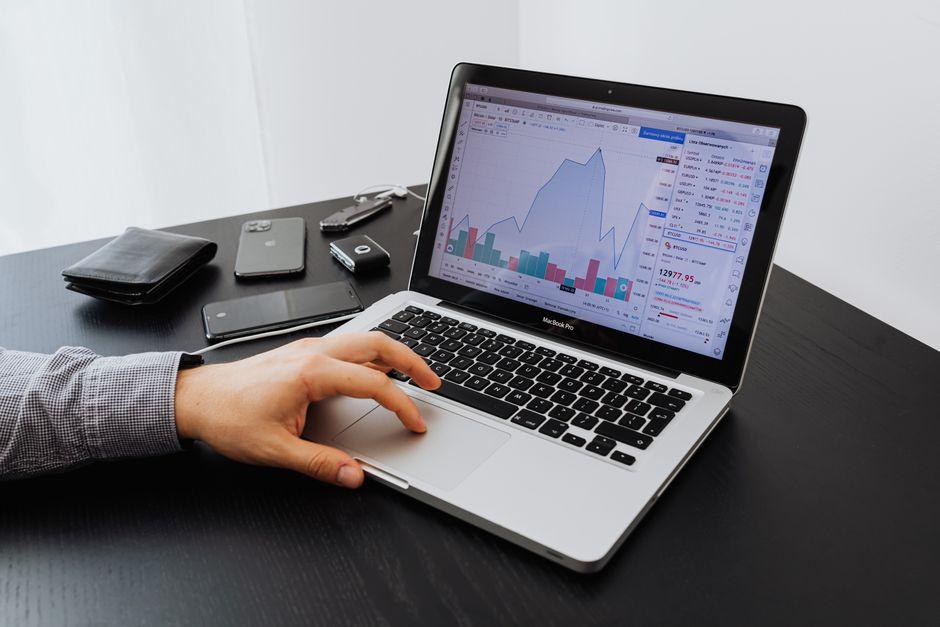
How Market Efficiency Shapes Price Reversals & Trends

Table of Contents
- Introduction
- What Is Market Efficiency and Its Impact on Prices
- Why Market Efficiency Matters for Traders and Investors
- Core Concepts
- Step‑by‑Step Guide
- Practical Tips for Better Results
- Common Mistakes to Avoid
- Frequently Asked Questions
- Conclusion
Introduction
When a leading technology company posted earnings that fell short of consensus, its S&P 500‑listed shares dropped 2.3 % within minutes, only to claw back half an hour later. A day trader glued to the order book saw the bid‑ask spread widen dramatically, entered a short position, and covered as the price snapped back. The same earnings surprise a week earlier sparked a multi‑day decline that lingered well into the following trading session.
The contrast is not a coincidence. It reflects how fast market participants digest new information and how quickly arbitrageurs eliminate pricing gaps. In venues where information is incorporated within seconds, price adjustments are almost instantaneous; in markets where the diffusion process lags, short‑lived reversals appear, offering a narrow window for profit.
Grasping the mechanics of information flow, liquidity, and order‑flow dynamics is essential for anyone who wants to tell a fleeting bounce from a genuine trend. The following sections break down market efficiency, illustrate its influence on reversals and trends, and provide a concrete workflow that works across equities, futures, and digital assets.
What Is Market Efficiency and Its Impact on Prices?
Market efficiency measures the extent to which an asset’s price reflects every piece of information available at a given moment. The classic taxonomy—weak, semi‑strong, and strong—captures three layers of data incorporation:
* Weak‑form markets embed only historical price and volume patterns. Technical indicators derived from past trades retain predictive power, but new public news is not instantly priced.
* Semi‑strong markets absorb all publicly released information—press releases, SEC filings, macro data—within a short horizon. Once the news hits the tape, the price adjusts to the new equilibrium.
* Strong markets go a step further, pricing insider or non‑public information the instant it becomes known to a privileged few.
Consider the Federal Reserve’s surprise rate cut on a Tuesday morning. In a semi‑strong environment, crude‑oil futures on the NYMEX react within a handful of seconds, erasing the initial gap as market makers rebalance their books. In a weak‑form setting, the same announcement might leave a noticeable price void that persists for hours, creating a clear entry point for a momentum‑oriented trade that rides the delayed reaction.
Why Market Efficiency Matters for Traders and Investors
Professional arbitrage desks at CFTC‑registered firms monitor order‑book imbalances in real time, hunting for price discrepancies that exist for fractions of a second. Retail traders who ignore the prevailing efficiency regime often chase signals that have already been priced out, eroding their edge. Conversely, a trader who can read the market’s efficiency level can time reversals when diffusion lags, or ride trends when the market is slow to reverse.
Ignoring efficiency can produce two costly outcomes:
* Premature exits – entering a “reversal” that is merely a continuation of an existing trend, leading to higher transaction costs and a lower Sharpe ratio.
* Excessive commissions – paying wide spreads in a market where price discovery is already complete, which chips away at net returns.
Matching capital to the market’s speed of adjustment is a cornerstone of sound portfolio construction. High‑frequency arbitrage thrives in ultra‑efficient venues such as the CME or major equity exchanges, while medium‑term mean‑reversion strategies find fertile ground in less liquid, slower‑moving stocks.
Information Diffusion Speed — how quickly news moves through the order book
When a corporation files a 10‑K that discloses a material acquisition, the filing first appears on the SEC’s EDGAR system, then propagates through Bloomberg terminals, social‑media feeds, and finally reaches market makers. In a semi‑strong market, the diffusion completes within seconds; in a weak‑form market, the lag can stretch to minutes or even hours.
A concrete scenario: a day trader watches Apple (AAPL) on the Nasdaq and notices a sudden surge in bid size after a rumor of a new product launch. In a fast‑diffusing market, the price spikes and stabilizes within a few seconds, leaving little room for a reversal trade. In a slower diffusion environment, the trader can place a short‑term sell order at the inflated price and capture the pull‑back when the rumor proves unfounded.
Arbitrage Latency and Profit Decay — the window between mispricing and correction
Arbitrageurs exploit price differentials across venues—e.g., CME S&P 500 futures versus the SPY ETF on the NYSE. The latency between detecting a mispricing and executing the trade determines profit magnitude. In highly efficient markets, latency is measured in microseconds; profit decay is almost instantaneous.
Consider a swing trader who spots a 0.8 % basis spread between the S&P 500 futures contract (CME) and the corresponding ETF (SPY). In a weak‑form segment of the futures market, the spread can linger for several hours, allowing the trader to lock in the basis. In a strong‑form environment, high‑frequency firms would close the spread within seconds, leaving the swing trader with a missed opportunity.
Mean Reversion vs. Momentum Dynamics — the tug of price correction and trend continuation
Mean reversion assumes prices drift back toward an intrinsic value after a shock, while momentum assumes the shock pushes prices further in the same direction. Market efficiency influences which force dominates. When information is fully absorbed, the price often continues its direction (momentum). When absorption is incomplete, overreactions create fertile ground for mean reversion.
A practical illustration: after a Fed rate hike, the EUR/USD pair drops sharply. In a highly efficient forex market, the drop reflects the new equilibrium, and the pair continues lower (momentum). In a less efficient segment—perhaps during low‑liquidity hours in the Asian session—the pair may over‑react, and a 20‑day moving‑average crossover can capture a brief bounce back (mean reversion).
Core Concepts
## Step 1 — Identify the Efficiency Regime of Your Target Market
Begin by measuring the time it takes for price to incorporate a known news event. Use high‑frequency tick data—such as the CFTC’s market‑wide data feed—to calculate the lag between the news timestamp and the price’s stabilization within a tight band (e.g., ±0.1 %). If the lag is under a second, you are in a strong‑form environment; if it stretches beyond a minute, you are likely in a weak‑form setting.Step 2 — Choose a Strategy Aligned with the Regime
* Strong‑form / ultra‑efficient – Deploy latency‑arbitrage, statistical arbitrage, or market‑making strategies that profit from micro‑price discrepancies.
* Semi‑strong / moderate efficiency – Focus on event‑driven trades that capture short‑term liquidity imbalances after macro announcements.
* Weak‑form / low efficiency – Apply mean‑reversion tactics, such as Bollinger‑Band squeezes or moving‑average crossovers, to exploit delayed price adjustments.
Step 3 — Execute with Discipline and Risk Controls
Set entry triggers that reflect the identified lag. For a weak‑form equity, a 5‑minute candle that closes beyond two standard deviations of the 20‑minute VWAP may signal a reversal. Place stop‑loss orders just beyond the recent high/low to guard against trend continuation. Size the position using a volatility‑adjusted model (e.g., 1 % of equity per trade based on the asset’s 30‑day ATR).
Step 4 — Monitor Liquidity and Transaction Costs
Even in an efficient market, wide spreads can erode arbitrage profits. Track the bid‑ask spread, market depth, and execution slippage on the exchange (e.g., NYSE, CME). If the spread widens beyond a pre‑defined threshold—say, 2 bps for futures—pause the trade and reassess.
Step 5 — Review and Adapt
After each trade, log the observed diffusion speed, the realized profit decay, and any deviation from the expected mean‑reversion or momentum pattern. Over time, this data set will refine your classification of market efficiency for each instrument, allowing you to shift strategy before the market changes.
Practical Tips for Better Results
- Deploy a real‑time news aggregator—Bloomberg Terminal, Reuters Eikon, or a low‑latency API—that timestamps releases; compare timestamps to price moves for a quick efficiency gauge.
- When trading futures, watch the CME’s “order‑book imbalance” indicator; a sudden imbalance often precedes a short‑lived reversal in less efficient contracts.
- Combine volume‑weighted average price (VWAP) with order‑flow analysis to confirm whether a price move is backed by genuine buying pressure or merely a temporary distortion.
- In equity markets, filter stocks by average daily volume; low‑volume stocks tend to exhibit weaker semi‑strong efficiency, offering more reversal opportunities.
- For crypto assets, consider the exchange’s settlement latency; a slower settlement can create arbitrage windows that are invisible on faster, regulated venues.
- Keep an eye on implied volatility—VIX for equities, OVX for oil, or BTC IV for Bitcoin. Spikes often signal heightened uncertainty, which can delay information diffusion and prolong reversals.
- Apply a “time‑decay” filter: if a reversal signal persists beyond the typical diffusion window for that market, treat it as a potential trend rather than a reversal.
Common Mistakes to Avoid
- Assuming all markets are equally efficient—liquidity and regulation vary widely across asset classes, from the deep order books of the S&P 500 futures to the fragmented order flow of many altcoins.
- Ignoring transaction costs—high‑frequency arbitrage can be wiped out by fees, exchange rebates, and slippage.
- Over‑relying on a single indicator—price, volume, and order‑flow should converge before entering a trade.
- Failing to adjust position size for volatility—larger swings in less efficient markets demand tighter risk controls.
- Chasing a reversal after the price has already corrected—speed matters; delays turn reversals into trend continuations.
How does market efficiency affect price reversals?
When information diffuses slowly, prices can overshoot their fair value, creating a temporary mispricing that later reverts. In efficient markets, the overshoot is minimal, and reversals are rare or fleeting.
What is the relationship between market efficiency and trends?
Efficient markets incorporate new data quickly, allowing trends to persist as long as the underlying fundamentals support them. Inefficient markets may generate short‑term trends driven by liquidity imbalances rather than fundamentals, which often reverse once the imbalance resolves.
Why do efficient markets limit trend persistence?
Because participants constantly arbitrage away any price deviation from the new equilibrium, leaving little room for a trend to extend beyond the initial reaction to the information.
When can price reversals occur in an efficient market?
Reversals can still appear during periods of extreme liquidity stress—e.g., after a flash crash or when market makers withdraw. In those moments, the usual diffusion speed slows, opening a narrow window for reversal trades.
Can traders profit from reversals in a semi‑strong efficient market?
Yes, but the window is typically measured in seconds to minutes. Success requires low‑latency execution, tight spreads, and a clear understanding of the news‑impact timeline.
Is market efficiency a myth for short‑term traders?
Not a myth, but a spectrum. Short‑term traders must recognize that efficiency varies by instrument, time of day, and market conditions. Treat efficiency as a dynamic variable rather than a fixed property.
Conclusion
The key insight is that the speed at which markets absorb information determines whether a price move will reverse quickly or evolve into a lasting trend. By diagnosing the efficiency regime—through diffusion‑speed metrics, arbitrage latency, and mean‑reversion versus momentum cues—traders can align their strategy with the market’s true behavior.
A practical next step: pick one liquid instrument you trade, collect tick‑level data around a recent news event, and calculate the diffusion lag. Use that lag to decide whether a reversal or trend strategy is appropriate for the next similar event.
Remember, no approach guarantees profit. Always size positions to withstand adverse moves, respect liquidity constraints, and stay alert to regime shifts. Trading responsibly means treating market efficiency as a tool, not a shortcut.
—
This article is for educational purposes only and does not constitute investment advice. Trading and investing carry risk of loss; never invest more than you can afford to lose.
Last reviewed: August 2026