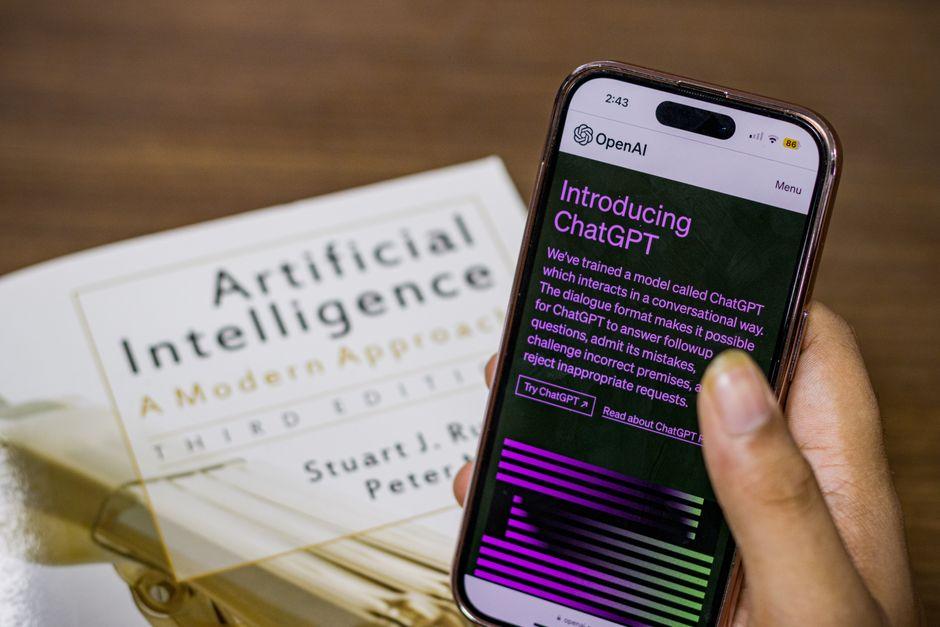
How ChatGPT Is Changing Financial Markets

Is Changing Financial Markets: A Working Analyst’s View
Table of Contents
- Introduction
- What Is ChatGPT Doing in Financial Markets?
- Why This Matters for Traders and Investors
- Core Concepts
- Step-by-Step Guide: Building a ChatGPT Workflow for Market Research
- Practical Tips for Better Results
- Common Mistakes to Avoid
- Frequently Asked Questions
- Conclusion
Introduction
Inside a long/short equity shop in mid-2024, the closing bell rang, and within ninety seconds a research associate had already produced a one-paragraph reaction to the latest Federal Reserve statement. That paragraph wasn’t written by a human. It was produced by a large language model, fine-tuned over two decades of historical FOMC releases, and reviewed by a portfolio manager before any position in rate-sensitive bank and REIT names was touched. The same week, a retail swing trader on a brokerage forum posted screenshots of ChatGPT extracting customer concentration risk from four quarters of NVDA 10-Qs and building a bull/bear case table in under five minutes.
How ChatGPT is changing financial markets is no longer a forecast. It is a measurable shift in how market-moving text gets parsed, how research gets assembled, and how trading ideas get prototyped. The model is not a strategy on its own. It is a workflow accelerator, and the gap between firms that have wired it in and firms that have not is widening quarter by quarter.
This article explains the mechanisms, describing where large language models already add value, where they fabricate, and how a working analyst should think about the tool in 2025 and beyond. The discussion is grounded in the daily reality of a research desk rather than in a vendor pitch deck.
What Is ChatGPT Doing in Financial Markets?
ChatGPT is a large language model (LLM) developed by OpenAI, trained on broad text corpora and accessible through a chat interface or, more importantly for finance, through an API. In financial markets, it is being used less as a chatbot and more as a language interface over data, a way to summarize filings, extract signals from unstructured text, and prototype quant screens in natural language.
Think of it as a junior analyst who reads very fast, never sleeps, and forgets things. The analogy matters. The model is exceptional at reading and rephrasing; it is unreliable at arithmetic and at facts older than its training cutoff. Most useful applications in finance sit within that envelope: turning seventy pages of a 10-K into a ten-bullet risk summary, classifying the tone of a central bank statement, or rewriting a sell-side note into a structured JSON file a screening tool can ingest.
The framing matters because most public debate about AI in finance gets the order of operations wrong. The technology does not generate alpha on its own. It compresses the time between a data release and a tradable interpretation of that release. That is a real shift, but it is a shift in cost structure and information velocity, not in edge.
Why This Matters for Traders and Investors
Three groups are affected, and they are affected differently.
Institutional desks — quant funds, macro hedge funds, asset managers — use the model to compress research cycles. A junior analyst who once spent two days reading every 10-Q in a sector can now produce a first-pass summary in an afternoon, freeing senior time for the actual investment decision. Several large hedge funds have publicly disclosed partnerships with OpenAI, and the SEC has begun asking buy-side firms how they supervise AI-generated research during routine examinations.
Retail traders and active investors get a cheaper version of the same use case. A swing trader no longer needs a Bloomberg terminal to read transcripts of every earnings call. They can paste a transcript into a chat window and ask for changes in management tone quarter over quarter. That is a real edge, especially for traders who do not have a dedicated research team behind them.
Sell-side research and corporate finance get the largest disruption. Drafting a first version of an initiation note or a fairness opinion takes longer than editing one. Firms that hand ChatGPT the inputs and let it produce a draft are cutting turnaround time, although the regulatory and reputational risk of publishing a fabricated number is real. A research note that cites a revenue figure that does not exist in the underlying 10-K is a career-ending event in this industry.
The cost of ignoring the shift is not catastrophic today. It is the kind of slow decline that compounds: a desk that produces sixteen thematic reports a year is now competing with one that produces forty. Over a three-year horizon, that gap is the difference between a flagship product and a footnote.
Core Concepts
NLP-Driven Sentiment Extraction From Earnings Calls and Central Bank Statements
Sentiment extraction is the oldest and most validated use case. Natural language processing (NLP) models can classify the tone of a paragraph — hawkish, dovish, optimistic, cautious — and the difference between a modern LLM and a 2018-vintage sentiment model is context. Older models scored words. A modern LLM scores meaning.
A long/short equity desk uses ChatGPT to score FOMC statement language against twenty years of past releases. The model is prompted: “Rate this statement on a dovish-to-hawkish scale of -5 to +5, compare to the previous statement, and list the three sentences that moved the score most.” The output is not a trading signal. It is a trigger: a fifteen-minute window to reposition rate-sensitive bank and REIT positions before implied volatility in the VIX expands as rates traders re-price. The model reads faster than any human on the desk; the human still decides whether the move is worth the slippage.
The same mechanism works on earnings calls. A prompt that asks for “every mention of inventory build, customer concentration, and capex deferral” beats a keyword search because it catches nuance. A CEO who says “we are being disciplined in our investment cadence” is, on the balance of probability, signaling capex cuts. A keyword search misses that. The LLM catches it because it reads the sentence as a whole rather than matching a string.
Prompt-Engineered Trade Idea Generation and Factor Screen Prototyping
Prompt engineering is the practice of writing inputs that produce consistent, useful outputs. In finance, this matters because the wrong prompt produces confident nonsense. A good prompt includes the data, the format, the constraints, and the audience.
A junior analyst at a fundamental fund can prompt: “Given these ten 10-Ks in the consumer staples sector, return a JSON object with revenue growth, gross margin, return on invested capital, and net debt/EBITDA for each company, and rank them by a quality score of your construction. Show the formula.” The model produces a first-pass screen. The analyst still has to verify the numbers against the source filings. The hours saved are real, and they show up in the time senior PMs have to spend on actual stock selection.
The mechanism is general. Trade idea generation, factor screen prototyping, summarizing sell-side notes, drafting memos, generating chart captions — all of these benefit from a structured prompt that constrains the model to a specific format. The danger is the assistant that writes a “high-conviction short” memo with made-up ratios and a confident tone. Verification is not optional in this workflow; it is the entire workflow.
Retrieval-Augmented Generation Over SEC Filings, 10-Ks, and Alternative Data
The single most important concept in this article is retrieval-augmented generation (RAG). A stock LLM has a training cutoff and no source citation. It will, with confidence, invent a number. A RAG pipeline grounds the model: when a user asks a question, the system first retrieves the relevant document — an SEC filing, a 10-Q, an earnings transcript — and then feeds it to the model with the instruction “answer only using this document.”
The retail swing trader described in the introduction is doing RAG manually. They pasted four NVDA 10-Qs into the chat window and asked the model to extract every mention of customer concentration risk. The transcripts are the corpus. The model is the interface. The output is a bull/bear case table that the trader reviews before the next earnings print, and the trader still pulls the actual filing to confirm any number that is going to influence a position size.
A more sophisticated version lives on a fund’s research terminal. The RAG system indexes every 10-K filed in the last twenty-four hours, plus internal research notes, plus alternative data sources such as credit card transaction feeds and satellite imagery summaries. A portfolio manager asks: “Which of our holdings mentioned a meaningful change in supplier terms in their last filing?” The system retrieves the relevant paragraphs, summarizes them, and cites the source. The result is faster research with auditable sources, which is exactly what an SEC examination or a compliance officer wants to see.
Step-by-Step Guide: Building a ChatGPT Workflow for Market Research
Step 1 — Define the Decision You Want to Support
Before opening a chat window, name the decision. Is it “should we add to our bank position before Friday’s CPI print?” or “which consumer staples names deserve a deeper look this week?” The model is a research tool. It does not produce decisions. The clearer the decision, the sharper the prompt and the more useful the output.
A practical exercise: write the decision in one sentence. If the sentence needs three clauses, you are not yet ready to prompt. Refine the question until it is testable, and the model will reward that clarity with a focused answer rather than a generic one.
Step 2 — Build a Document Pipeline (RAG Over Your Sources)
Upload your sources. For a long-only investor, that means the most recent 10-Ks and 10-Qs of the names you cover, plus the latest earnings transcripts and the last two FOMC statements. For a macro trader, that means the central bank statements, the latest dot plot, and the minutes from the most recent meeting.
The model reads the documents, then answers questions grounded in them. Without this step, the model falls back on its training data and starts hallucinating numbers. A RAG pipeline is the difference between a research tool and a confident liar, and on a real desk that distinction is what keeps you out of the compliance file.
Step 3 — Write the Prompt With Constraints
A useful prompt has four elements: the data, the role, the format, and the constraint. Example: “You are an equity analyst. Using only the attached 10-K, extract the four largest customer concentration risks, rank them by disclosed dollar exposure, and present the result as a table with a one-line summary. If the data is not in the document, say ‘not disclosed.’”
The “not disclosed” clause is critical. It instructs the model to admit ignorance rather than fabricate. It is the single most important sentence in any financial workflow because it converts hallucination into a visible gap in the data — and visible gaps can be investigated.
Step 4 — Verify, Then Act
Every number that comes out of the model must be checked against the source. Every claim attributed to a CEO must be searched in the transcript. The workflow is not “ask, then trade.” It is “ask, verify, then trade.” The verification step is what separates a research tool from a marketing demo, and it is the step most often skipped when traders get excited about a slick output.
For higher-stakes trades, apply the same skepticism you would apply to a junior analyst on their first week. The model is faster than the junior. It is also more confident, and confidence without verification is exactly how retail traders blow up accounts on a single misread 10-K.
Step 5 — Log the Output for Compliance
If you are at a registered adviser, the SEC’s marketing rule and the books-and-records rule both apply. AI-generated research used to inform a recommendation should be logged: the prompt, the output, the source documents, and the analyst’s verification notes. This is not just a regulatory hygiene question; it is the only way to debug a workflow that produces a bad call, and it is the only way to defend that workflow to a regulator who has not used the tool.
Practical Tips for Better Results
- Constrain the model to a single document or a small set of documents. A model asked to scan two hundred files will start generalizing. A model asked to scan two will read them carefully.
- Use the “not disclosed” escape hatch. The instruction to admit ignorance is the single most reliable defense against fabrication, and it should appear in every financial prompt you write.
- Run the same prompt twice and compare outputs. LLMs are stochastic. If two outputs disagree on a fact, the answer is in the source document, not in the model, and the model is telling you to go read the document.
- Ask the model to show its work. “Cite the sentence you used for this conclusion” is a powerful prompt that forces grounding and gives the analyst something to verify line by line.
- Keep humans in the loop on every numerical claim. The model is great at language. It is poor at arithmetic and stale on facts after the training cutoff, which is why the S&P 500 moves it does not know about are a real blind spot.
- Tailor the prompt to the audience. A summary for a portfolio manager should be one paragraph. A summary for a research memo should be structured. The model adjusts tone and length when asked, and that adjustment is part of the value.
- Update the corpus regularly. A RAG system that ingests last week’s filings is a research tool. A RAG system that ingests filings from 2023 is a historical archive, and archives do not generate alpha.
Common Mistakes to Avoid
- Treating the model as a forecaster. ChatGPT cannot predict stock prices. Anyone who tells you it can is selling something. Use it to summarize information, not to predict outcomes, and treat any “AI prediction” pitch with the same suspicion you would treat a hot tip from a stranger.
- Posting portfolio data into the public chat interface. The default ChatGPT interface is not a confidential channel. Use the API with enterprise controls, or you risk exposing material non-public information in a way that no compliance department can defend.
- Skipping the verification step. The most common failure mode is a fabricated number that looks plausible. Every figure must be checked against the source, and the analyst who skips this step is one earnings release away from a bad trade.
- Letting the model choose the questions. A prompt that says “what should I know about this stock?” produces a generic answer. A prompt that asks a specific question produces a useful one, and the difference shows up in the quality of the resulting trade idea.
- Replacing a research process with a chat. The model is a tool inside a research workflow. It is not the workflow. Desks that have tried to replace analysts with the model have, in most documented cases, produced more noise, not less signal.
- Ignoring the regulatory layer. The SEC, FCA, and CFTC have all flagged AI-generated research in recent comment letters. Firms that do not document their AI use are exposing themselves to enforcement risk that has nothing to do with whether the model was right, and that risk is only rising as the agencies build out their AI supervision teams.
Frequently Asked Questions
How is ChatGPT used in stock trading?
ChatGPT is used to parse earnings calls, summarize SEC filings, extract sentiment from central bank statements, and prototype factor screens. Most trading desks use it as a research accelerator, not as a signal generator. The workflow is: ask the model to summarize or extract, verify the output against the source, then act on the underlying analysis. The model does not place trades; it compresses the time a human analyst spends reading, and that compression is where the productivity gain shows up on a P&L.
Can ChatGPT predict stock market movements?
No. ChatGPT is a language model. It does not forecast prices, returns, or volatility with any documented edge. Studies have consistently shown that LLM-based “prediction” tools perform no better than chance on out-of-sample data. The model can summarize what professionals are saying about a market, but consensus is not a forecast. Treat any claim that the model can predict prices as a sales pitch, and price that pitch accordingly.
What can ChatGPT do for financial analysis?
In practice, four things: summarize long documents (10-Ks, transcripts, research notes), extract structured data from unstructured text, classify sentiment and tone, and draft first-pass research memos. Each of these cuts hours of work into minutes. None of them replaces the underlying judgment of a trained analyst. The model is best used as a junior that drafts so the senior can edit, and the senior still owns the call.
Is ChatGPT reliable for investment decisions?
For language tasks grounded in a specific document, with a RAG pipeline and a verification step, yes — within the limits of the model’s reasoning. For factual claims about prices, returns, or events after the training cutoff, no. Reliability is a function of the workflow, not the model. A workflow that uses ChatGPT without grounding is unreliable by construction. A workflow that grounds, cites, and verifies is meaningfully faster than a manual one, and that speed compounds over a quarter.
Why are hedge funds using ChatGPT?
Two reasons. First, productivity. A junior analyst’s marginal product rises sharply when the model handles the first pass on documents. Second, the model is good at tasks that do not scale linearly with headcount — parsing ten thousand news articles a day, classifying every 8-K filing, screening transcripts for changes in language. Several large hedge funds have publicly disclosed partnerships with OpenAI or OpenAI competitors, and the SEC has begun asking about AI supervision in its routine examinations.
How do retail traders use ChatGPT for research?
Most retail traders use the public chat interface to summarize earnings transcripts, extract risk factors from 10-Ks, and brainstorm trade ideas. The practical workflow is to paste the source document into the chat, ask a specific question, and then verify the answer against the original text. The convenience is real. The risk is posting material non-public information or position data into a public interface. Use the API with appropriate privacy controls, or restrict the workflow to public information only.
Conclusion
The single most important lesson is that ChatGPT is a workflow tool, not a strategy. It changes how analysts read, summarize, and prototype — and it leaves the actual decision, the actual risk management, and the actual accountability where it always belonged: with the human at the desk. The firms that benefit most are the ones that wire the model into a clearly defined research process, ground every answer in a source document, and log every output for compliance.
The practical next step is small. Pick one research task you already do — pulling risk factors from a 10-K, summarizing an earnings call, or screening a sector — and run it through a RAG pipeline with a verified prompt. Time the result. Compare it to the manual version. If the model genuinely cuts the time, expand the workflow. If it produces noise, refine the prompt and try again. The tool is mature enough to be useful. The desk that learns the workflow first compounds the edge over a multi-year horizon.
Trading and investing carry the risk of substantial loss. AI tools can sharpen a process, but they do not remove the risk of a bad decision. Use position sizing, stops, and disciplined documentation. Verify every model output before acting. The market does not reward confidence — it rewards process, and it punishes the desks that forget the difference.
—
This article is for educational purposes only and does not constitute investment advice. Trading and investing carry risk of loss; never invest more than you can afford to lose.
Last reviewed: August 2026