















































Gold Futures: How Central Banks Influence the Market

Table of Contents
- Introduction
- What Is Gold Futures Trading?
- Why Gold Futures Matter for Traders and Investors
- Core Concepts of the Gold Futures Market
- Step-by-Step Guide to Trading Gold Futures
- Practical Tips for Better Results
- Common Mistakes to Avoid
- Frequently Asked Questions
- Conclusion
Introduction
When the People’s Bank of China (PBOC) or the Reserve Bank of India adjusts its reserve allocation toward bullion, the impact is felt long before the physical gold reaches a secure vault. These institutional shifts ripple through the COMEX and other futures exchanges, fundamentally altering the price discovery process for every market participant, from the quantitative hedge fund manager to the retail swing trader.
The primary error most traders make is viewing gold as a simplistic safe haven asset. By doing so, they ignore the underlying plumbing of the market: the intricate relationship between central bank liquidity, real interest rates, and the futures curve. In a monetary regime where the Federal Reserve is pivoting its stance on inflation and quantitative tightening, understanding how institutional flows move gold futures is the difference between anticipating a structural trend and merely chasing a volatility spike.
This guide examines the mechanics of the gold futures market and specifically how central bank policies create volatility and opportunity. We will analyze the relationship between spot prices and futures contracts, the influence of global reserve shifts, and the rigorous risk management required to survive in a high-leverage environment.
What Is Gold Futures Trading?
Gold futures are standardized contracts to buy or sell a specific quantity of gold at a predetermined price on a set future date. Unlike spot gold, where an investor exchanges cash for metal immediately, futures are derivatives. They derive their value from the underlying price of gold but are traded on centralized exchanges such as the COMEX (part of the CME Group), which ensures deep liquidity and counterparty reliability.
For example, a trader might go long on one gold futures contract for December delivery at $2,300 per ounce. If the market price climbs to $2,350 by November, the trader can close the position for a profit without ever intending to take physical delivery of 100 ounces of gold. The vast majority of futures traders offset or square their positions before the contract expires to avoid the logistical and financial burden of physical settlement.
Why Gold Futures Matter for Traders and Investors
Central banks are the largest whales in the gold market. When a sovereign entity decides to diversify away from the US Dollar, they often execute large-scale purchases that dwarf retail activity. Because the futures market is the primary venue for price discovery, these institutional shifts manifest as changes in open interest and price volatility.
Ignoring these flows is a recipe for failure. A retail trader might identify a technical head and shoulders pattern suggesting a price drop, while simultaneously, a central bank is aggressively accumulating reserves to hedge against currency devaluation. In almost every instance, institutional flow overrides retail technical patterns.
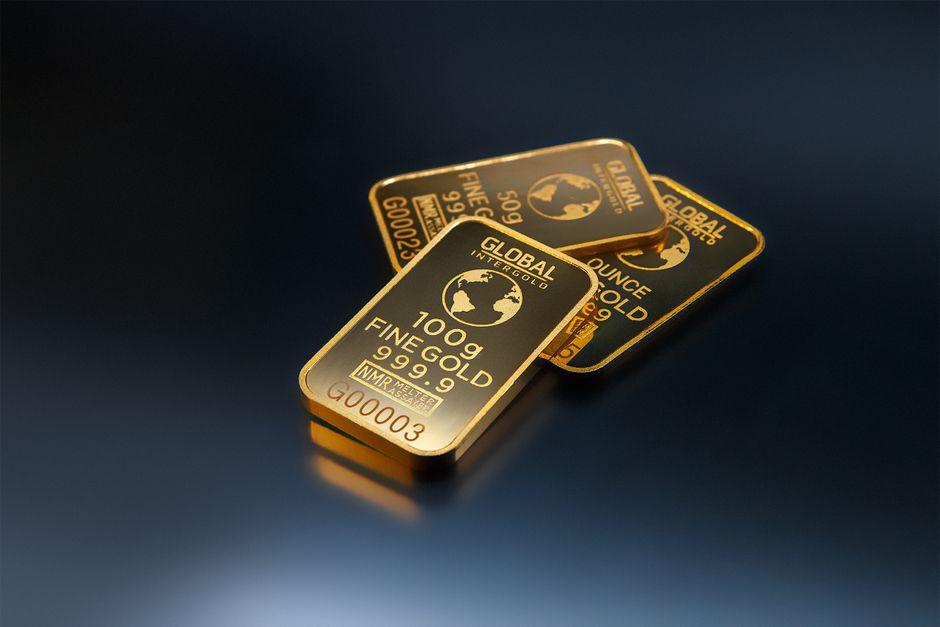
For the sophisticated investor, futures provide a precise mechanism to hedge a physical portfolio. If you hold physical gold bars but anticipate a short-term correction due to a hawkish Federal Reserve, selling gold futures allows you to lock in a price and protect your equity without the friction and cost of selling physical holdings.
Contango and Backwardation in Gold Contracts
The relationship between the current spot price and the futures price is defined by the basis. In a standard market environment, gold futures typically trade at a premium to the spot price, a condition known as contango. This premium exists because the futures price must account for the cost of carry, which includes storage, insurance, and the opportunity cost of interest lost by not holding cash.
Consider a scenario where spot gold is $2,300 and the December contract is $2,320. This $20 difference represents the carry. If the market suddenly shifts into backwardation—where the futures price is lower than the spot price—it usually signals an urgent, immediate demand for physical gold. This phenomenon often occurs during severe geopolitical crises or when central banks are frantically replenishing reserves, causing near-month contracts to spike as participants scramble for immediate delivery.
The Impact of IMF Special Drawing Rights (SDRs)
The International Monetary Fund (IMF) manages Special Drawing Rights (SDRs), which serve as international reserve assets. While the SDR is a basket of currencies, the IMF’s own gold holdings and the methodology it uses to distribute reserves influence global liquidity. When the IMF alters its gold valuation or distribution, it signals a shift in the global trust regime.
For instance, if the IMF reports a significant change in how gold is valued relative to the SDR basket, it can trigger a wave of rebalancing by member central banks. A trader observing this may notice a steady increase in long positions in gold futures as central banks move to align their portfolios with new global standards. This is a fundamental driver that often precedes technical breakouts.
Correlation between Real Interest Rates and Gold Prices
Gold is a non-yielding asset; it pays neither a dividend nor a coupon. Consequently, its primary competitor is the US Treasury bond. The most critical metric for a gold futures trader is the real interest rate, calculated as the nominal yield minus inflation. When real rates rise, the opportunity cost of holding gold increases, and gold futures typically face downward pressure.
Imagine the Federal Reserve raises interest rates while inflation remains stagnant. Real yields climb. In this environment, institutional investors rotate capital from gold futures into Treasuries to capture the guaranteed yield. Conversely, if inflation spikes but the Fed maintains low rates, real rates go negative. This makes gold futures highly attractive, as holding the metal becomes cheaper than holding cash that is losing purchasing power.
Margin Requirements and Leverage Ratios
Futures are traded on margin, meaning you only deposit a fraction of the total contract value. This amplifies both potential gains and potential losses. The CFTC and exchange operators set initial and maintenance margins to ensure the system remains stable during periods of high volatility.
Suppose a gold contract controls 100 ounces at $2,300, totaling $230,000 in notional value. If the exchange requires a $10,000 margin, you are effectively using 23:1 leverage. A mere 1% move in the price of gold results in a 23% gain or loss on your deposited capital. If the price drops and your account falls below the maintenance margin, you face a margin call, requiring you to deposit more funds immediately or face the liquidation of your position by the broker.
Step 1 — Analyze the Macro Regime
Before entering a trade, you must identify the current monetary policy phase. Review the Federal Open Market Committee (FOMC) calendar. Determine if the Fed is in a tightening cycle (raising rates) or an easing cycle (lowering rates). Check the latest reports from the World Gold Council regarding central bank net purchases. If central banks are buying and real rates are falling, the macro wind is at your back for a long position.
Step 2 — Select the Right Instrument and Contract
Decide between full-sized contracts (100 oz) and micro contracts (10 oz). Beginners should almost always start with Micro Gold futures to manage the risk of drawdown. Choose your expiration month based on your specific timeframe. For a short-term swing trade, the nearest active month is the standard choice. For a longer-term hedge, you might look at a contract six months out to avoid the friction and costs associated with frequent rolling, which is the process of closing one contract and opening the next.
Step 3 — Establish Position Sizing and Risk Parameters
Calculate your maximum acceptable loss per trade. Do not base your position size on the leverage available, but rather on the volatility of the asset. Use a hard stop-loss order. For example, if you are long gold futures, place a stop-loss below a major structural support level or a specific percentage of your account equity, such as 1% to 2%. This prevents a single flash crash or an unexpected Fed announcement from wiping out your trading capital.
Step 4 — Execute and Manage the Trade
Enter the trade using a limit order to avoid slippage, especially during high-volatility events like Non-Farm Payroll (NFP) reports. Once in the trade, monitor the basis and the US Dollar Index (DXY). Because gold is priced in dollars, a surging DXY often creates a headwind for gold futures. If the trade moves in your favor, move your stop-loss to the break-even point to remove the risk of a total loss.
Practical Tips for Better Results
- Monitor the Commitment of Traders (COT) report. Look for extremes in Managed Money positioning. When speculators are overly long, the market is often ripe for a reversal, even if the fundamental outlook remains bullish.
- Track the US Dollar Index (DXY) as a primary inverse indicator. A strong dollar usually suppresses gold futures prices.
- Use a correlation matrix to see how gold is moving relative to 10-year Treasury yields. If gold is rising while yields are also rising, it indicates an extreme inflation hedge regime.
- Avoid trading the roll period unless you are an experienced arbitrageur. The transition between contract months can create artificial price volatility.
- Watch the timing of central bank announcements. The PBOC and other Asian banks often operate on different time zones, meaning the most significant moves can happen during the overnight session for US traders.
- Keep a liquidity buffer in your brokerage account. Never trade with 100% of your available margin; leave room for the implied volatility spikes that accompany geopolitical shocks.
Common Mistakes to Avoid
- Over-leveraging based on notional value. Traders often forget that a small price move in a 100-ounce contract represents a large amount of actual cash.
- Ignoring the cost of carry. Holding long futures for years without accounting for the roll costs can erode a significant portion of your profits.
- Trading against the Federal Reserve. Trying to go long gold while the Fed is aggressively hiking rates into a recession is a high-probability way to experience a maximum drawdown.
- Confusing spot gold with futures. Assuming that a limit order on a spot platform behaves the same as a futures contract during a liquidity gap can lead to unexpected fills.
- Neglecting the physical signal. If the futures price is significantly higher than the spot price, indicating extreme contango, the market may be overextended and a correction is likely.
How do central bank gold purchases affect futures prices?
Central banks act as the ultimate buyers. When they accumulate gold, they remove supply from the available market and create a structural floor for prices. This institutional demand is often signaled in the futures market through increased open interest and a tightening of the basis between spot and futures prices.
What is the difference between gold futures and gold ETFs?
Gold ETFs, such as GLD, track the price of gold and are traded like stocks. Gold futures are leveraged contracts for future delivery. ETFs are generally better for long-term buy and hold investors, while futures are tools for active traders who want leverage, hedging capabilities, and the ability to profit from falling prices by shorting.
Why does the US Dollar strength impact gold futures?
Gold is globally priced in US Dollars. When the dollar strengthens, it takes fewer dollars to buy the same amount of gold, which pushes the price down. Additionally, a strong dollar often reflects a strong US economy or higher US yields, both of which reduce the relative appeal of gold.
When is the best time to trade gold futures based on Fed meetings?
The most volatility occurs immediately after the FOMC press conference. Traders look for divergence, where the Fed says one thing, but the market interprets it differently. The best entries often happen after the initial knee-jerk reaction has settled and a clear trend emerges based on the new real rate outlook.
Can retail traders hedge against inflation using gold futures?
Yes, by taking long positions in gold futures, traders can offset the loss of purchasing power in their cash holdings. However, because of leverage, this is a high-risk strategy. A retail trader must use small position sizes to ensure that a temporary price dip does not trigger a margin call before the inflation hedge pays off.
Is gold futures trading riskier than spot gold?
Yes, significantly. Spot gold, whether physical or via some brokers, has a 1:1 risk-to-reward ratio. Gold futures use leverage, meaning you can lose more than your initial investment if the market moves sharply against you. The risk of a margin call makes futures a professional tool that requires strict risk management.
Conclusion
The gold futures market is not merely a reflection of fear or greed, but a complex interaction between central bank reserve policies and the global cost of capital. The most successful traders are those who can decouple the noise of daily price action from the signal of institutional flows. When central banks diversify their reserves and real interest rates decline, gold futures typically enter a powerful bullish regime.
Your next step should be to examine the current real yield of the US 10-year Treasury and compare it with the recent gold accumulation trends reported by the World Gold Council. This will provide a baseline for whether the current market is overextended or undervalued.
Trading futures involves substantial risk of loss and is not suitable for every investor. The use of leverage can lead to losses that exceed your initial deposit. Always prioritize capital preservation over potential gains and use strict stop-loss protocols.
—
This article is for educational purposes only and does not constitute investment advice. Trading and investing carry risk of loss; never invest more than you can afford to lose.
Last reviewed: August 2026