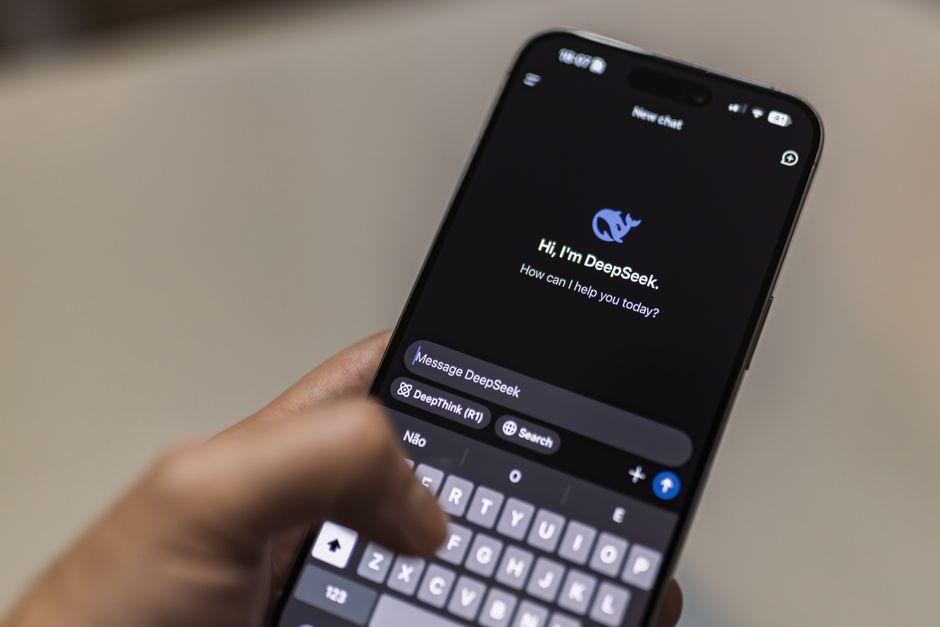
DeepSeek vs ChatGPT for Financial Statement Analysis: Which Wins?

Table of Contents
- Introduction
- What Is DeepSeek vs ChatGPT for Financial Statement Analysis
- Why This Comparison Matters for Traders and Investors
- Core Concepts
- Step‑by‑Step Guide
- Practical Tips for Better Results
- Common Mistakes to Avoid
- Frequently Asked Questions
- Conclusion
Introduction
DeepSeek and ChatGPT sit at the heart of today’s AI‑augmented research workflow. Knowing how each model behaves can reshape a trader’s daily routine.
When Apple filed its Q4 2023 10‑K, the headline operating‑margin surge lit up earnings‑call transcripts and sent the stock up 3 percent in after‑hours trading. Retail investors scrambled for the exact numbers that justified the move, while sell‑side analysts dug into the footnotes to gauge whether the margin expansion was repeatable. In that split‑second window, two AI assistants—DeepSeek and ChatGPT—were both promoted as shortcuts for parsing the filing. Their answers, however, were worlds apart.
If you have ever pasted a raw SEC filing into a language model and received a vague paragraph instead of a clean ratio table, you know the frustration. The market is now flooded with AI‑driven research tools, yet only a handful can reliably pull the granular data needed for valuation, risk‑adjusted returns, and position sizing. This guide pits DeepSeek against ChatGPT on three core tasks—ratio extraction, domain‑specific SEC knowledge, and chain‑of‑thought cash‑flow forecasting—to reveal which model delivers a genuine analytical edge.
We will walk through the mechanics, provide a reproducible workflow, and flag the pitfalls that can turn a promising AI output into a costly misread.What Is DeepSeek vs ChatGPT for Financial Statement Analysis?
In plain language, DeepSeek and ChatGPT are large language models (LLMs) that translate natural‑language prompts into text. When you ask them to read a 10‑K or 10‑Q, they act as automated research assistants: they locate line items, compute ratios, and even project future cash flows.
Consider the prompt, “list Apple’s operating margin for the last three fiscal years and flag any year‑over‑year improvement above 5 %.” DeepSeek returns a concise two‑column table, highlights the 2023 increase, and adds a brief note that the margin expansion could support a bullish view. ChatGPT, given the same request, may produce a narrative paragraph that mentions the margin rise but leaves out the exact percentages, forcing the analyst to dig back into the filing for verification.
The distinction matters because a trader who can trust the model’s numbers saves minutes on data entry and reduces the chance of a spreadsheet error that could swing a position’s risk profile.Why This Comparison Matters for Traders and Investors
Equity analysts, quant teams, and active retail traders all depend on timely, accurate financial metrics. A single misread of a depreciation footnote can distort EBITDA, shifting a discounted cash‑flow (DCF) valuation by millions of dollars.
When a model consistently delivers clean ratios, you can:
* Cut manual data‑entry time, freeing capital for higher‑conviction trades.
* Boost back‑testing fidelity by feeding precise inputs into factor models that track the S&P 500 or Nasdaq‑100.
* Spot accounting red flags—such as aggressive revenue recognition—before they ripple through market prices.
On the flip side, a model that glosses over footnotes or misinterprets “stock‑based compensation” can cause you to underestimate dilution risk, a mistake the SEC routinely highlights in its comment letters. The comparison therefore touches execution speed, model risk, and ultimately portfolio performance.Prompt Engineering for Ratio Extraction — how precise wording unlocks clean tables
A well‑crafted prompt tells the model exactly what format you need. For ratio extraction, the prompt should specify the statement, the fiscal period, and the desired output structure.
Scenario: You need Apple’s current ratio for FY 2022, FY 2023, and FY 2024.
* DeepSeek Prompt: “Extract the total current assets and total current liabilities from Apple’s 10‑K for FY 2022‑FY 2024, then calculate the current ratio for each year. Return a markdown table with columns ‘Fiscal Year’ and ‘Current Ratio’.”
* Result: DeepSeek parses the balance sheet, performs the division, and returns a clean three‑row table.
ChatGPT, when given a less explicit prompt, may answer with a paragraph that says “Apple’s current ratio improved modestly over the period,” leaving the analyst to locate the raw numbers. The core lesson is that prompt precision reduces post‑processing effort and limits the chance of a mis‑calculation.Fine‑Tuning on SEC 10‑K and 10‑Q Filings — why domain‑specific training matters
Both models can be fine‑tuned on a corpus of SEC filings, but the process differs. DeepSeek offers an open‑source fine‑tuning pipeline that lets you feed thousands of 10‑K and 10‑Q PDFs, aligning the model’s token embeddings with accounting terminology.
Scenario: A hedge fund builds a proprietary dataset of 5,000 filings from the last decade, focusing on the “Management’s Discussion and Analysis” (MD&A) section. After fine‑tuning, DeepSeek consistently identifies forward‑looking language (“expects to…”) and flags it for sentiment scoring.
ChatGPT’s fine‑tuning is limited to OpenAI’s internal process; users can only apply “system messages” to steer behavior. This restriction means ChatGPT may still misinterpret niche footnote language, such as “non‑recurring gain from asset disposal,” whereas a fine‑tuned DeepSeek model learns that such gains should be excluded from operating earnings calculations.Chain‑of‑Thought Reasoning for Cash‑Flow Forecasting — building multi‑step logic inside the model
Chain‑of‑thought (CoT) prompting asks the model to walk through each calculation step before delivering a final answer. The technique mitigates hallucination in forward‑looking forecasts.
Scenario: You want to forecast next‑year free cash flow (FCF) for a utility company based on the last three years of cash‑flow statements.
* Prompt (CoT style): “First, compute the average operating cash flow growth rate from 2021‑2023. Second, apply that rate to 2023 operating cash flow. Third, subtract average capital expenditures over the same period. Finally, present the projected 2024 FCF.”
DeepSeek, when combined with a CoT prompt, returns each intermediate figure, allowing you to verify the growth rate before the final number. ChatGPT can also follow CoT prompts, but its internal consistency sometimes falters when the arithmetic involves large numbers, leading to rounding errors that are hard to spot without a detailed audit.Step‑by‑Step Guide
Step 1 — Gather the filing and prepare the text
- Download the target 10‑K or 10‑Q from the SEC’s EDGAR system.
- Convert the PDF or HTML to plain text using a tool like pdftotext, Apache Tika, or an open‑source scraper.
- Strip boilerplate sections (e.g., “Forward‑Looking Statements”) that do not contain financial line items.
Step 2 — Choose the model and set up the prompt
* Model selection: If you have the compute budget to host a fine‑tuned model, deploy DeepSeek on a GPU‑enabled instance. Otherwise, access ChatGPT via the OpenAI API.
* Prompt design: Follow the pattern shown earlier—state the exact line items, the fiscal years, and the output format (markdown table, JSON, CSV, etc.).
* Chain‑of‑thought: Add “Step‑by‑step” language when you need multi‑stage calculations, such as cash‑flow forecasting.Step 3 — Execute, validate, and iterate
- Run the prompt through the model and capture the raw response.
- Cross‑check the extracted numbers against the original filing. A quick spreadsheet formula (e.g.,
=B2/C2) can verify ratios. - If discrepancies appear, refine the prompt: add “ignore any values in footnotes” or “use the consolidated balance sheet only.”
- Once validated, feed the clean data into your valuation model, factor‑loading script, or risk‑management dashboard.
Practical Tips for Better Results
* Leverage XBRL tags: EDGAR filings embed XBRL identifiers (e.g.,
us-gaap:OperatingRevenue). Including these tags in the prompt can steer the model to the exact element.
* Cache frequent filings: Store parsed text for large‑cap stocks like those in the S&P 500; this reduces API latency and cost.
* Combine models: Use DeepSeek for raw extraction, then pass the structured output to ChatGPT for narrative commentary. The hybrid approach captures the strengths of both.
* Watch token limits: A full 10‑K can exceed the model’s context window. Split the document into logical sections (Balance Sheet, Income Statement, Cash Flow) and process sequentially.
* Apply sanity filters: Set threshold rules—e.g., a current ratio should fall between 0.5 and 5.0. Flag any out‑of‑range results for manual review.
* Version‑control prompts: Store each prompt version in a Git repository; small wording changes can have outsized effects on output quality.
* Stay compliant: Ensure your use of SEC data respects the SEC’s public‑domain policy and any licensing terms of the AI provider.Common Mistakes to Avoid
* Assuming perfect accuracy: LLMs can hallucinate numbers; always verify against the source filing.
* Neglecting footnote nuance: Ignoring footnotes may cause double‑counting of revenue or omission of contingent liabilities.
* Over‑relying on a single model: Different models have distinct biases; using only one can blind you to systematic errors.
* Forgetting context windows: Feeding an entire 10‑K without chunking can truncate critical sections, leading to incomplete analysis.
* Skipping prompt iteration: The first prompt is rarely optimal; refining language saves time in the long run.How does DeepSeek compare to ChatGPT for financial statement analysis?
DeepSeek offers open‑source fine‑tuning and more transparent token handling, which often yields cleaner numeric tables after prompt engineering. ChatGPT provides a polished narrative but may miss precise figures unless the prompt is highly specific.
What are the strengths of DeepSeek in ratio analysis?
Its ability to be fine‑tuned on XBRL‑tagged SEC filings lets DeepSeek recognize accounting line items directly, producing accurate ratios with minimal post‑processing.
Why might ChatGPT miss subtle accounting footnotes?
ChatGPT’s training data blends general language with limited exposure to the dense legalese of footnotes. Without fine‑tuning, it may treat footnote content as ancillary text rather than core financial data.
When should I use DeepSeek versus ChatGPT for earnings calls?
If you need a quick, structured summary of quantitative metrics—e.g., EPS growth, operating margin—DeepSeek’s extraction shines. For a broader, narrative‑style briefing that captures management tone, ChatGPT’s language generation is more suitable.
Can I fine‑tune either model on my own portfolio data?
DeepSeek’s open‑source framework allows you to upload a custom corpus of your portfolio’s filings and train the model locally. ChatGPT does not support user‑level fine‑tuning; you can only influence behavior with system prompts.
Is AI‑generated financial analysis reliable for investment decisions?
AI tools accelerate data collection but remain prone to hallucination and misinterpretation of nuanced accounting language. Treat AI output as a first draft; always corroborate with the original filing and, where possible, with professional judgment.
Conclusion
The decisive advantage lies in the workflow, not the brand name. DeepSeek’s fine‑tuning capability and precise prompt handling deliver the clean numeric backbone that rigorous valuation demands, while ChatGPT excels at turning those numbers into readable commentary. For a trader who values speed and accuracy, the practical next step is to set up a sandbox: fine‑tune a DeepSeek instance on a small batch of recent 10‑Ks, craft a ratio‑extraction prompt, and compare the output against a manual spreadsheet.
Remember, AI‑generated analysis is a tool, not a substitute for disciplined risk management. Verify every figure, respect the limits of the model’s context window, and never base a trade solely on an unchecked output.
—
This article is for educational purposes only and does not constitute investment advice. Trading and investing carry risk of loss; never invest more than you can afford to lose.
Last reviewed August 2026
Last reviewed: August 2026