










































Can I Day Trade Options? Rules and Psychological Readiness

Table of Contents
- Introduction
- What Is Options Day Trading?
- Why Options Day Trading Matters for Traders and Investors
- Core Concepts
- Step-by-Step Guide to Getting Started
- Practical Tips for Better Results
- Common Mistakes to Avoid
- Frequently Asked Questions
- Conclusion
Introduction
Imagine a scenario where the Federal Reserve announces a surprise interest rate hike. Within seconds, the S&P 500 dips and the VIX spikes. A retail trader holding a long-term portfolio might see a 1% drop and simply wait for a recovery. However, a professional day trader using options sees this as a window to capture a massive price swing in a matter of minutes. The speed of these movements is alluring, but for the unprepared, it is a recipe for a total account wipeout.
Many investors ask, “can I day trade options?” after seeing screenshots of massive percentage gains on social media. The technical answer is yes, but the practical answer depends on your available capital, your grasp of derivative pricing, and your ability to remain clinical when a trade moves against you. Options are not stocks; they are wasting assets with non-linear risk profiles.
This guide examines the mechanical rules governing these trades, the mathematical forces that erode option value, and the psychological discipline required to operate in high-velocity markets. We will move beyond the basics to explain how professional traders manage the intersection of time, volatility, and price.
What Is Options Day Trading?
Options day trading is the practice of buying and selling options contracts within the same trading session, closing all positions before the closing bell to eliminate overnight risk. Unlike swing trading, where a position might be held for weeks to capture a broader trend, day trading focuses on intraday volatility and short-term price inefficiencies.
For example, a trader might notice that the Nasdaq 100 is bouncing off a major support level at 10:00 AM. They buy At-The-Money (ATM) Call options on the QQQ ETF, betting that the index will rally by 2:00 PM. If the rally occurs, the trader sells the contract for a profit before the market closes, regardless of whether the underlying index has reached a long-term target. The goal is to capture a slice of the intraday move and exit the position entirely.
Why Options Day Trading Matters for Traders and Investors
For the active trader, options provide a level of capital efficiency that shares cannot match. Because an option contract controls 100 shares of the underlying asset for a fraction of the cost, the potential for percentage gains is significantly higher. This allows traders to express a market view with a defined, limited risk—the most you can lose on a long call or put is the premium paid.
Ignoring the nuances of options day trading can be catastrophic. If you treat an option like a stock, you ignore the time decay that eats your profit every hour you hold the position. Investors who fail to understand the difference between directional movement and volatility shifts often find themselves in a position where the stock price moves in their favor, but the option value still drops.
For institutional researchers and retail traders alike, mastering this instrument is about understanding the Greeks. These are the variables that dictate how an option’s price reacts to changes in the underlying asset’s price, the passage of time, and the market’s expectation of future volatility.
Theta Decay and Time Sensitivity
Theta represents the rate at which an option’s value declines as it approaches the expiration date. In day trading, this is most aggressive in 0DTE (Zero Days to Expiration) contracts. Because the contract expires at the end of the day, the time value evaporates rapidly.
Consider a trader scalping 0DTE SPY calls during a high-volatility FOMC announcement. If the market remains flat for thirty minutes, the value of those calls will drop even if the SPY price does not move. This is theta decay in action. The trader is not just fighting the price direction; they are fighting a clock that is actively stealing value from their position. In the final hours of a contract, theta becomes the dominant force, making time the trader’s greatest enemy.
Delta Neutrality and Directional Bias
Delta measures how much an option’s price is expected to move for every $1 move in the underlying stock. A Delta of 0.50 means the option price should move $0.50 for every $1 move in the stock. Day traders often struggle with directional bias, where they become emotionally attached to a bullish or bearish view, ignoring the actual price action.
Professional traders sometimes employ delta-neutral strategies to profit from volatility rather than direction. For example, executing a Credit Spread on a highly liquid stock allows a trader to profit from sideways price action. By selling a call and buying a further out-of-the-money call, the trader creates a zone where the stock can move up, down, or stay flat, and the trade still yields a profit as long as the stock stays below the short strike. This shifts the focus from guessing the direction to managing the probability of the outcome.
Implied Volatility (IV) Crush
Implied Volatility reflects the market’s expectation of how much a stock will move. When IV is high, options are more expensive. An IV Crush occurs when a major event, such as an earnings report, passes and the uncertainty vanishes, causing IV to plummet.
Imagine buying a call option right before an earnings announcement. The stock price jumps 2% after the report—exactly what you predicted. But you open your broker and find the option value has decreased. This happens because the high IV that inflated the option’s price before the event collapsed instantly after the news was released. The loss in volatility value outweighed the gain in price movement. This is why buying options at the peak of IV is often a losing strategy, even if the direction is correct.
The Pattern Day Trader (PDT) Rule
For those trading in the U.S., the SEC and FINRA enforce the Pattern Day Trader rule. A day trade is defined as buying and selling the same security on the same day. If you execute four or more day trades within five business days in a margin account, you are flagged as a PDT.
Once flagged, you must maintain a minimum equity of $25,000 in your account. If your balance drops below this threshold, your broker will restrict you from day trading until the balance is restored. This is a critical barrier for beginners. Many attempt to circumvent this by using cash accounts, but cash accounts require settlement time (T+1 for options), meaning you cannot reuse your capital immediately after a trade. This creates a liquidity constraint that can prevent a trader from seizing a fast-moving opportunity.
Step-by-Step Guide to Getting Started
Step 1 — Establish Your Capital and Account Type
Before placing a trade, decide between a cash account and a margin account. If you have less than $25,000, a cash account avoids the PDT rule but limits your liquidity. You can only trade with the settled cash in your account. If you have over $25,000, a margin account allows for more flexibility and the use of advanced strategies like spreads. It is vital to understand that margin increases your buying power but also increases the risk of a margin call if the market moves sharply against your positions.
Step 2 — Select a High-Liquidity Instrument
Avoid trading options on stocks with wide bid-ask spreads. In day trading, the spread is a hidden tax. If the bid is $1.00 and the ask is $1.10, you are effectively down 10% the moment you enter the trade. Focus on instruments with massive volume, such as SPY, QQQ, or high-cap tech stocks like Apple or Nvidia. Check the Open Interest to ensure you can exit your position quickly without slippage. Liquidity is the difference between a clean exit and being trapped in a position as the price crashes.
Step 3 — Define Your Entry and Exit Rules
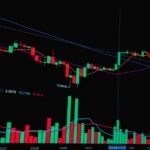
Mechanical rules remove the emotion that leads to revenge trading. Your entry should be based on a specific trigger, such as a break of the VWAP (Volume Weighted Average Price) or a specific candlestick pattern on the 5-minute chart. Relying on a gut feeling is a fast track to account depletion.
Your exit must be predetermined. Set a hard stop-loss, such as exiting if the option loses 20% of its value, and a profit target, such as selling when the option gains 30%. Do not hope for a recovery; the non-linear nature of options means a 20% loss can turn into an 80% loss in minutes. A disciplined trader accepts the loss and moves to the next setup.
Step 4 — Execute and Monitor the Greeks
Once in the trade, monitor your Delta and Theta. If the trade is taking longer than expected to hit your target, theta decay is working against you. If the underlying stock’s momentum slows, your Delta will drop, and the option will lose value faster. Exit the trade if the original thesis—the reason you entered—is no longer supported by the price action. Monitoring the Greeks allows you to understand why your position is moving the way it is, preventing the panic that comes from unexplained price swings.
Practical Tips for Better Results
- Trade the first 90 minutes of the market open. This is where the highest liquidity and volatility reside, providing the moves necessary for day trading. After the initial surge, markets often enter a midday lull where theta decay outweighs price movement.
- Use a Paper Trading account for at least one month. This allows you to test your strategy and get a feel for option pricing without risking real capital. It is the only way to calibrate your risk tolerance without paying for it in real dollars.
- Focus on one or two tickers. Trying to track twenty different stocks leads to analysis paralysis and missed entries. Mastery of a few instruments allows you to recognize their specific volatility patterns and support/resistance levels.
- Keep a detailed trade journal. Record the entry price, the IV at the time, the Greeks, and your emotional state during the trade. Reviewing your losses is more valuable than celebrating your wins.
- Prioritize the Risk-Reward Ratio. Aim for at least a 1:2 ratio. If you risk $100 to make $200, you can be wrong more than half the time and still remain profitable. This mathematical edge is what separates professionals from gamblers.
- Monitor the VIX (Volatility Index). When the VIX is spiking, option premiums are higher, and price swings are more violent. Adjust your position sizing accordingly; high volatility requires smaller positions to maintain the same risk profile.
Common Mistakes to Avoid
- Over-leveraging the account. Putting 50% of your capital into a single 0DTE trade is gambling, not trading. A single gap or sudden move can wipe out your account. Professional risk management usually dictates risking no more than 1% to 2% of total account equity on a single trade.
- Averaging down on losing options. In stock trading, averaging down can lower your cost basis. In options, you are averaging down on a wasting asset. This usually results in a total loss of the premium. If the thesis is wrong, exit the trade; do not throw good money after bad.
- Ignoring the bid-ask spread. Entering a trade via a Market Order in a low-liquidity option can result in immediate slippage that makes a profitable trade a losing one. Always use Limit Orders to ensure you enter and exit at your desired price.
- Trading during chop. When the market is moving sideways in a tight range, both calls and puts lose value due to theta decay. Avoid trading in low-volatility regimes where there is no clear trend.
- Revenge trading. Attempting to win back a loss by doubling the position size on the next trade is the fastest way to a margin call. Emotional trading ignores the math and replaces strategy with desperation.
How much money do I need to day trade options?
Technically, you can start with a few hundred dollars in a cash account. But to avoid the PDT rule and trade with professional flexibility, $25,000 is the standard threshold for margin accounts. Regardless of the amount, you should only trade capital you can afford to lose entirely.
What is the best strategy for options day trading?
There is no single best strategy, but many professionals use a combination of momentum trading (buying calls/puts on strong trends) and mean-reversion (selling spreads when a stock is overextended). The best strategy is the one that fits your risk tolerance and is backed by a consistent set of mechanical rules.
Why do options lose value so quickly?
This is primarily due to theta decay. Options have an expiration date, and as that date approaches, the probability of the option ending In-The-Money decreases if the price does not move. This time-decay accelerates as the contract nears expiration, especially in the final 24 hours.
When is the best time of day to trade options?
The first two hours of the trading day (9:30 AM to 11:30 AM EST) typically offer the most volume and volatility. The lunch hour often sees a drop in activity and sideways movement, while the final hour before the close can bring a second surge of volatility as positions are squared away.
Can I day trade options with a small account?
Yes, by using a cash account to avoid the PDT rule. The trade-off is that you must wait for the funds from a closed trade to settle before you can use them again. This limits the number of trades you can take per day but protects you from the $25,000 margin requirement.
Is day trading options legal for beginners?
It is legal, provided you have a brokerage account and have been approved for options trading by the firm. Brokers assign option levels based on your experience and financial profile. Some advanced strategies, like selling uncovered options, require the highest level of approval due to the unlimited risk involved.
Conclusion
The ability to day trade options is available to anyone with a brokerage account, but the ability to do so profitably is a rare skill. The core lesson is that options are not just a bet on price direction; they are a bet on time and volatility. If you ignore theta and implied volatility, you are trading with a blindfold.
Your next step should be to open a demo account and track the behavior of a single liquid instrument, like the SPY, for two weeks. Observe how the price of a call option changes when the stock moves sideways versus when it trends. Understanding these dynamics is the only way to survive in the long run.
Trading involves significant risk of loss. High-velocity options trading can result in the loss of your entire investment in a very short period. Never trade with money required for living expenses, and always prioritize risk management over the pursuit of gains.
Risk Disclaimer: Trading options involves significant risk and is not suitable for all investors. The value of options can fluctuate rapidly, and you may lose your entire investment. Past performance is not indicative of future results. This content is for educational purposes only and does not constitute financial advice.
***
This article is for educational purposes only and does not constitute investment advice. Trading and investing carry risk of loss; never invest more than you can afford to lose.
Last reviewed: August 2026