


















































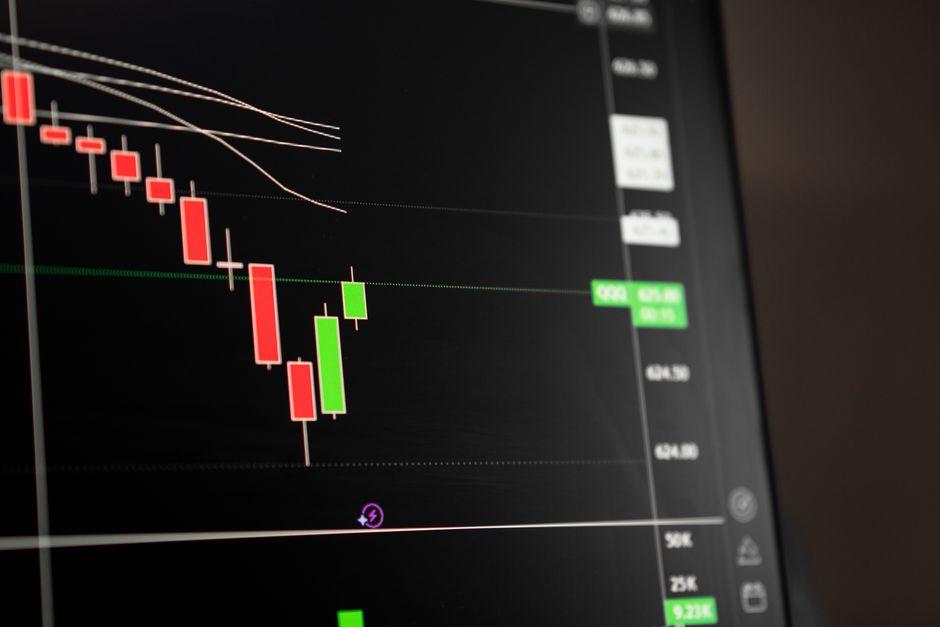
Best Scalping Platforms for Beginners: 2024 Guide

Table of Contents
- Introduction
- What Is Scalping
- Why Scalping Platforms Matter for Traders and Investors
- Core Concepts
- Step-by-Step Guide
- Practical Tips for Better Results
- Common Mistakes to Avoid
- Frequently Asked Questions
- Conclusion
Introduction
The best scalping platform determines whether scalping strategies remain viable or slowly erode your account through costs and execution slippage.
Picture this: you’re at your desk during the Asian session, watching EUR/USD trade within a 10-pip range. You spot a slight upward movement and enter a long position at 1.0820. Ninety seconds later, the price reaches 1.0825 and you exit with a clean $50 profit on a standard lot. This is scalping in practice—small price movements, quick decisions, and rapid turnover. The entire strategy rests on one critical factor: your trading platform.
For beginners, choosing the right platform has nothing to do with flashy charts or marketing promises. Execution quality, cost structure, and whether the tools match your experience level—that’s what separates profitable scalpers from those bleeding money over hundreds of trades. The difference between a platform that fills your order at the exact price you see and one that slips you three pips can determine whether you stay profitable or slowly drain your capital. This guide cuts through broker marketing and shows you what actually matters when selecting a scalping platform in 2024.
What Is Scalping
Scalping is a short-term trading strategy where traders aim to profit from tiny price movements, typically holding positions for seconds to minutes. The approach demands high liquidity, tight spreads, and fast execution—three factors that vary dramatically between brokers and platforms.
A scalper might execute 20 to 100 trades in a single session, each targeting 3 to 10 pips on a major forex pair. The mathematics are straightforward: small gains compound quickly when turnover is high. But the same logic works in reverse. If your platform adds just one extra pip of cost per trade through wide spreads or poor execution, those small profits vanish entirely.
Consider this example: buying 1,000 shares of a highly liquid stock at $50.25 and selling within three minutes at $50.30 generates a $50 gross profit before commissions. If your platform charges $5 per trade, you’ve lost money despite catching the move correctly. That razor-thin margin between success and failure explains why platform selection matters so much for scalpers.
Why Scalping Platforms Matter for Traders and Investors
Every scalper competes against professionals wielding institutional-grade infrastructure. Your platform connects you to the market, and that connection carries latency, cost, and reliability implications you cannot trade around.
The most aggressive broker marketing promotes raw spreads without explaining what those numbers actually mean for your trading. Raw spreads can appear attractively low, but they frequently come with commissions that exceed the all-in cost of fixed-spread accounts. For beginners especially, the simpler fee structure matters far more than the headline number.
Mobile synchronization has become essential for modern scalpers. You might start your morning at a desktop but need to manage positions during a commute. A platform that doesn’t sync properly between devices creates dangerous gaps where you’re operating blind. Several brokers lost customer money in 2023 during volatile sessions because their mobile apps lagged behind desktop execution by several seconds—an eternity in scalping timeframes.
Regulatory oversight matters too. Brokers regulated by the SEC, FCA, or CFTC offer meaningful capital protection and must meet reserve requirements that shield client funds in bankruptcy proceedings. Unregulated or offshore brokers often advertise better-looking spreads but provide zero protection if they vanish with your money.
Market Order Execution Latency
Latency measures the time between your click and the order reaching the broker’s server. For scalping, anything above 100 milliseconds introduces meaningful slippage risk during volatile markets. You might see EUR/USD at 1.0850, click to buy, and get filled at 1.0853 because the market moved three pips in that fraction of a second.
Professional scalping platforms use co-location servers near major financial centers—London, New York, Tokyo—to minimize this gap. Most retail brokers cannot match institutional latency, but the difference between 50ms and 200ms becomes noticeable over hundreds of trades. When evaluating platforms, look for mentions of ECN execution, dedicated servers, or co-location rather than accepting vague claims about “fast execution.”
During the 2022 pound flash crash, many retail traders on major platforms watched their stop-losses trigger at prices ten or more pips away from where they’d set them. Traders on lower-latency ECN platforms fared materially better because their orders reached the market faster.
Variable vs Fixed Spreads
Variable spreads fluctuate with market conditions—they tighten during liquid sessions like London and New York overlaps and widen during thin periods like Asian early hours or major news events. Fixed spreads remain constant regardless of conditions but are typically wider than the tightest variable spreads available.
For scalping, variable spreads usually work better because your strategy targets the most liquid periods anyway. During the London-New York overlap, major pairs like EUR/USD might show spreads of 0.1 to 0.3 pips on an ECN account. That same pair might carry a 2-pip fixed spread elsewhere. Over 50 trades per day, the cost difference compounds significantly.
But variable spreads create unpredictability. If you’re scalping during a thin Asian session and the spread widens to 5 pips on your usual 1-pip pair, your 3-pip target becomes unachievable. Understanding which spreads prevail during which sessions helps you plan trading hours rather than forcing entries when conditions are unfavorable.
Margin Call Thresholds
Scalping requires leverage to make small price movements financially meaningful. But leverage magnifies both profits and losses, and margin calls occur when account equity falls below the broker’s maintenance threshold—typically 50% to 100% of required margin.
Beginners frequently underestimate how quickly a few losing trades can trigger a margin call when using high leverage. If you have $1,000 in your account and open a standard lot ($100,000 position) on EUR/USD, you need roughly $1,000 in margin at 100:1 leverage. A 100-pip move against you loses $1,000—your entire account equity. The platform liquidates your position automatically when equity hits the maintenance margin level, typically around $500 in this scenario.
Different brokers set varying margin call and stop-out levels. Some provide breathing room at 50% equity; others liquidate immediately at 100%. For scalping, where volatile spikes can move prices 50+ pips in seconds, understanding your broker’s exact liquidation rules matters enormously.
One-Click Trading Functionality
Speed matters so much in scalping that clicking through confirmation dialogs costs you money. One-click trading allows immediate execution by clicking the bid or offer once rather than confirming the order in a popup. This feature appears standard on most modern platforms but remains absent on some older or more basic offerings.
The mechanism works like this: you see GBP/JPY at 188.50/188.52 and want to go long. With one-click enabled, you click 188.52 and the order fills instantly. Without it, you click, a confirmation box appears, you click confirm, and during that two-second process the price might have moved to 188.55—three pips worse than your intended entry.
Beyond one-click entry, look for one-click modification. This allows you to adjust stop-loss or take-profit levels instantly as price moves, becoming essential when managing multiple positions simultaneously.
Stop-Loss Slippage Protection
Slippage occurs when your stop-loss executes at a worse price than you specified. During normal market conditions, a few pips of slippage is normal. During volatile events, it can be catastrophic.
Some platforms offer guaranteed stop-losses that fill at your exact price regardless of market conditions—for a fee. Others provide partial protection or guarantee protection only during regular market hours. Understanding what your platform offers matters because one adverse slippage event can wipe out dozens of profitable scalps.
During the 2023 banking crisis volatility, retail traders on several major platforms experienced slippage of 50+ pips on their stop-losses for major currency pairs—losses far exceeding what the market actually moved in most cases. Traders with guaranteed stops or those on ECN execution desks avoided most of this pain.
Mobile Platform Synchronization
Modern scalpers rarely trade from a single device. You might open positions on desktop during your morning routine, check on them during your commute via phone, and close them from your laptop at night. If your mobile platform doesn’t synchronize in real-time, you might see outdated prices and make decisions based on information that no longer reflects market reality.
Beyond price synchronization, position management functionality matters. Can you modify stops and targets from your phone? Can you see your full equity and margin status on mobile? Can you execute one-click trades from the app? These features vary significantly between brokers, and testing the mobile app before funding an account is essential for any serious scalper.
Step-by-Step Guide
Step 1 — Define Your Trading Goals and Risk Tolerance
Before examining platforms, honestly assess why you want to scalp and what you can afford to lose. Scalping is statistically the most demanding trading style—most retail scalpers lose money over time. If you’re starting with capital you cannot afford to lose, the right platform choice won’t save you.
Determine your account size, maximum daily loss limit, and how much time you can dedicate to trading during liquid sessions. These parameters narrow your platform choices significantly because they affect which brokers will even accept you as a client.
Step 2 — Compare Execution Quality and Costs
Create a spreadsheet comparing five to seven brokers on the factors that matter: average spreads during London and New York sessions, commission structure per lot, minimum deposit requirements, and available leverage. Look for ECN or STP execution models rather than market maker structures, as the former typically offers better execution during volatile periods.
Open demo accounts on your top three choices and trade identically for one to two weeks. Execute the same number of trades you’d plan to make live and track the real costs including commission. Demo execution quality sometimes differs from live execution, but this exercise reveals platform responsiveness and stability.
Step 3 — Test Real Trading Before Funding
After narrowing to one or two platforms, fund a small live account—$200 to $500 is enough to test real execution without taking serious risk. Trade your strategy for one month with strict position sizing. Track every trade including slippage, commission, and any issues with order fills.
If the platform performs acceptably and you’ve preserved your capital through the test month, you can reasonably scale up. If you’ve lost money due to execution issues rather than strategy mistakes, you’ve learned something valuable about that platform without risking your full trading capital.
Practical Tips for Better Results
Start with major currency pairs like EUR/USD, USD/JPY, and GBP/USD before attempting crosses or exotic pairs. The superior liquidity means tighter spreads and more reliable execution.
Trade during the most liquid sessions—London and New York overlap (8 AM to 12 PM EST) offers the tightest spreads and fastest execution speeds.
Use a dedicated device for trading when possible. Background applications and network congestion on shared connections add latency you don’t need.
Keep your platform software updated. Brokers regularly update execution logic and connectivity; running outdated software creates unnecessary risk.
Maintain a backup method for accessing your account. If your primary internet fails, can you trade from your phone on cellular? Can you close positions through the broker’s web platform if your trading app crashes?
Common Mistakes to Avoid
Choosing a broker based solely on headline spread numbers without calculating all-in costs including commission ranks as the most common error. A 0.0 pip spread with $6 commission per side actually costs more than a 1.0 pip spread with no commission on most currency pairs.
Ignoring margin call rules until you’re staring at a liquidation constitutes another frequent mistake. Understanding exactly where your broker closes positions prevents ugly surprises during losing streaks.
Scalping on unregulated or offshore brokers because they advertise slightly better spreads is tempting but dangerous. The few pips you might save mean nothing if the broker disappears with your funds.
Trading during major news events without understanding how spreads will widen catches many scalpers off guard. The same platform that gives you 0.2 pip spreads during quiet sessions might show 15-pip spreads during Non-Farm Payrolls releases.
Neglecting to test the mobile app before funding is surprisingly common. Many traders discover synchronization issues only after placing real money at risk.
What is the best scalping platform for beginners in 2024?
The “best” platform depends on your location, deposit size, and trading style. For most beginners, brokers offering MetaTrader 4 or MetaTrader 5 with ECN execution provide the best balance of reliability, low costs, and available educational resources. Look for brokers regulated by the FCA, CySEC, or ASIC, and avoid those requiring excessive minimum deposits.
How much money do I need to start scalping?
You can start scalping with $200 to $500 on most platforms accepting small accounts. But starting with $1,000 or more gives you breathing room to absorb the learning curve without triggering margin calls from normal losing streaks. Most experienced scalpers recommend having at least $2,000 to trade standard lots responsibly.
Is scalping suitable for beginners or is it too risky?
Scalping is statistically the most difficult trading style for beginners to profit from consistently. The high trade frequency means transaction costs compound quickly, and the fast decision-making required leaves little room for the analysis that longer-term traders can perform. Beginners often benefit more from swing trading or position trading while they develop skills and discipline.
What features should I look for in a scalping platform?
Focus on execution speed, spread transparency, one-click trading, mobile synchronization, and clear margin call rules. Demo the platform before funding, and specifically test order execution during volatile periods to see how spreads and slippage perform.
Can I scalp with a $100 account?
You can technically scalp with a $100 account using high leverage, but this is extremely risky. A few consecutive losing trades will trigger margin calls. Most professional scalpers consider $500 the absolute minimum starting capital for any serious attempt, with $1,000 to $2,000 being more practical for proper risk management.
Do all brokers allow scalping trading strategies?
Most forex brokers permit scalping, but some restrict it through minimum trade duration rules or prohibit it on certain account types. Always check the broker’s terms of service regarding scalping before opening an account. Some brokers reserve the right to close accounts they determine are scalping if it violates their business model.
Conclusion
Platform selection matters enormously for scalpers, but no platform compensates for poor risk management or an unprofitable strategy. The best scalping platform for a beginner is one with transparent costs, reliable execution, and regulatory protection—not the one advertising the lowest headline spreads.
Start with a demo account, trade your strategy identically across two or three platforms, track the real costs, and then fund the one that performs best under actual market conditions. Begin with small position sizes even after you’ve chosen a platform, because demo-to-live execution differences can surprise you.
Remember: scalping demands discipline, capital preservation, and realistic expectations. Most traders lose money attempting it. If you choose to pursue this strategy, respect the risk, understand the costs, and never trade with money you cannot afford to lose.
Trading involves substantial risk of loss and may not be suitable for all investors. Past performance does not guarantee future results.
—
This article is for educational purposes only and does not constitute investment advice. Trading and investing carry risk of loss; never invest more than you can afford to lose.
Last reviewed: August 2026


