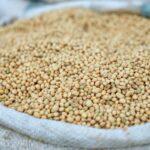
Agricultural Commodity Trading: How to Trade Grains

Table of Contents
- Introduction
- What Is Agricultural Commodity Trading?
- Why Agricultural Commodity Trading Matters for Traders and Investors
- Core Concepts
- Step-by-Step Guide to Trading Grains
- Practical Tips for Better Results
- Common Mistakes to Avoid
- Frequently Asked Questions
- Conclusion
Introduction
A sudden heatwave across the US Midwest or a logistics bottleneck at the Mississippi River can trigger immediate, violent price swings in the grain markets. For the professional trader, these are not merely weather events; they are catalysts for volatility that can either erode an account or provide a critical diversification benefit. When the S&P 500 corrects due to equity market volatility, agricultural assets often move on a distinct set of drivers, offering a strategic hedge against systemic financial crashes.
The primary pitfall for most retail participants is treating agricultural commodity trading as if they were trading a high-growth tech stock. They overlook the biological reality of planting cycles and the rigid regulatory structure of the CME Group. Without a firm grasp of the delta between a cash price and a futures price, or how a government report can trigger a limit-down move, a trader is essentially gambling on the weather rather than executing a strategy.
This guide establishes a professional framework for trading corn, wheat, and soybeans. We will examine the mechanics of futures contracts, the interpretation of fundamental reports, and the specific risk management strategies required to handle the unique volatility of the agricultural sector.
What Is Agricultural Commodity Trading?
Agricultural commodity trading involves the buying and selling of primary agricultural products, specifically grains and oilseeds, via standardized contracts. Unlike equity trading, where you own a piece of a corporation, you are trading the future delivery of a physical asset. The vast majority of market participants have no intention of taking delivery of 5,000 bushels of corn; instead, they trade the price action of the contract to profit from speculation or to hedge a physical position.
For instance, a trader might go long on a December Corn futures contract on the Chicago Board of Trade (CBOT) if they anticipate that a drought in Brazil will curtail global supply and drive prices higher. If the price appreciates, the trader sells the contract before the expiration date to capture the spread, never having physical contact with the grain. This process allows for high capital efficiency, as futures are traded on margin, meaning only a fraction of the total contract value is required to open a position.
Why Agricultural Commodity Trading Matters for Traders and Investors
Agricultural markets are governed by the most fundamental law of economics: the supply and demand for a basic human necessity. While a consumer might defer purchasing a new smartphone during a recession, the global population cannot stop eating. This creates a structural floor for demand that differs significantly from discretionary consumer goods.
Institutional investors and hedge funds utilize these markets to diversify their portfolios. Because crop yields are influenced by soil chemistry, precipitation, and temperature rather than Federal Reserve interest rate hikes or corporate earnings reports, agricultural commodities often exhibit a low correlation with traditional equity and bond portfolios. Ignoring these markets means missing a critical tool for reducing portfolio drawdowns during equity bear markets.
For the active trader, these markets offer deep liquidity and significant volatility. The use of margin allows for substantial leverage, though this inherently increases the risk of rapid losses. Understanding these markets allows a trader to pivot from financial assets to real assets when inflation rises, as food prices typically climb during inflationary regimes, providing a natural hedge against the eroding purchasing power of fiat currency.
WASDE Report Analysis
The World Agricultural Supply and Demand Estimates (WASDE) report, published monthly by the USDA, is the single most influential piece of data in the grain markets. It provides the official estimates on production, consumption, and ending stocks for corn, wheat, and soybeans. Crucially, the market does not react to the numbers in a vacuum, but rather to the deviation from the consensus expectation.
Consider a scenario where the market has already priced in a 100-million-bushel surplus of corn. If the WASDE report reveals only a 20-million-bushel surplus due to unexpected pest infestations, the surprise creates a bullish catalyst. Prices often gap higher instantly, triggering stop-losses and forcing short-sellers to cover their positions rapidly, which further accelerates the upward move.
Contango vs. Backwardation in Grain Futures
Agricultural futures rarely trade at a single price; they trade in a curve across different delivery months. Contango occurs when the futures price is higher than the spot price, reflecting the cost of carry, which includes storage, insurance, and interest. Backwardation occurs when the spot price is higher than the futures price, usually signaling an immediate, acute shortage.
In a contango market, a trader holding a long position faces a negative roll yield. If you hold a corn contract that expires in March and roll it to May, you may have to buy the May contract at a higher price than you sold the March contract. This creates a persistent drag on returns even if the spot price remains flat. Conversely, backwardation is often a signal of extreme bullishness, as buyers are willing to pay a premium for immediate delivery to avoid the risk of not having the commodity.
The Corn-Wheat-Soybean Substitution Effect
These three commodities do not trade in isolation. They compete for the same acreage in the US Corn Belt and are often substituted in livestock feed. If the price of corn becomes prohibitively expensive, livestock producers may shift toward wheat or barley, increasing demand for those alternatives and potentially lowering corn demand.
For example, if soybean prices surge due to high demand from China, farmers may decide to plant more soybeans and less corn in the next spring cycle. This shift in planting intentions can lead to a projected corn shortage, driving corn prices up months before the first seed is even planted. Professional traders monitor these substitution ratios to predict long-term price trends and rotation patterns.
Physical Delivery vs. Cash Settlement
Most retail traders use cash-settled instruments or close their positions well before the delivery window. However, the underlying futures contracts are designed for physical delivery. If you hold a CBOT corn contract into the delivery period, you are legally obligated to provide or receive the physical grain at a designated warehouse.
A trader who fails to close a position may face a forced delivery scenario, which is a logistical nightmare for anyone without a commercial silo. This is why professional traders monitor the last trading day and the first notice day with extreme precision. To avoid this risk, many retail participants use ETFs or CFDs that track the index without the risk of physical delivery, though this comes with its own set of costs.
Seasonality and Planting Cycles
Agriculture is the only market with a biological clock. Prices typically follow a seasonal pattern: lows often occur during the harvest when supply is at its peak, and peaks occur during the weather premium months, typically June to August, when a single storm can destroy millions of acres of crops.
Imagine a wheat trader who ignores seasonality. They might buy wheat in July because the short-term trend looks bullish, unaware that the harvest is about to hit the market in August, which historically puts downward pressure on prices. A professional trader aligns their technical entries with these seasonal windows to increase the probability of success and avoid fighting the seasonal tide.
Step-by-Step Guide to Trading Grains
Step 1 — Define Your Timeframe and Instrument
First, decide if you are scalping intraday volatility, swing trading over several weeks, or taking a position trade based on a multi-month drought. Choose your instrument based on your available capital and risk tolerance. Futures contracts offer the highest precision and liquidity but require significant margin. ETFs provide easier access for smaller accounts but may suffer from the contango drag mentioned earlier, which can erode returns over time.
Step 2 — Analyze the Fundamental Backdrop
Before looking at a chart, analyze the current USDA WASDE projections. Determine if the market is in a surplus or a deficit. Examine the Crop Progress reports to see if planting is behind schedule or if emergence is lagging. If the fundamentals are bearish due to over-supply but the price is rising, you are likely looking at a technical rally that could collapse quickly once the market realizes the supply reality.
Step 3 — Identify the Market Regime
Determine if the grain is trending or ranging. In a trending market, use a trend-following strategy with trailing stops to capture the bulk of the move. In a range-bound market, look for mean-reversion trades at historical support and resistance levels. For example, if Corn is bouncing between $4.20 and $4.50 without a new fundamental catalyst, selling the top of the range is more logical than chasing a breakout that lacks fundamental support.
Step 4 — Calculate Position Size and Risk
Agricultural commodities can be exceptionally volatile. Use a fixed percentage of your account, such as 1% to 2%, per trade. Calculate the tick value of your contract precisely. In corn futures, one tick is 1/8 of a cent per bushel, which equals $12.50 per contract. If your stop-loss is 10 ticks away, you are risking $125 per contract. Ensure your position size does not expose you to a margin call during a sudden spike in implied volatility.
Step 5 — Execute and Manage the Trade
Enter the trade using a limit order to avoid slippage, especially during high-volatility events like USDA reports where spreads can widen. Once in the trade, set a hard stop-loss based on a technical level, such as the low of the previous week, rather than a random dollar amount. As the trade moves in your favor, move the stop to break-even to protect your capital and remove the risk from the table.
Practical Tips for Better Results
- Monitor the Basis: The basis is the difference between the local cash price and the futures price. A widening basis often indicates local logistics issues, such as barge delays on the Mississippi, that may not be immediately reflected in the global futures price.
- Track the US Dollar: Grains are priced in USD. Historically, a stronger dollar makes US exports more expensive for foreign buyers, which can put downward pressure on prices as demand shifts to other producing nations.
- Use the Commitment of Traders (COT) Report: Analyze the positioning of Commercials, who are typically hedgers, versus Non-Commercials, who are speculators. When speculators are extremely long, the market is often primed for a reversal as the crowd becomes overextended.
- Watch the Limit Up/Limit Down rules: In periods of extreme volatility, the exchange may halt trading if the price moves too far in one direction. Knowing these limits prevents you from panic-selling into a halt where liquidity disappears.
- Correlate with Energy: Corn is a primary feedstock for ethanol. If crude oil prices spike, the demand for ethanol often increases, which pulls corn prices higher regardless of the current crop yields.
- Diversify Across Grains: Do not concentrate all your risk into one crop. While corn and soybeans often move together, wheat is influenced by different geopolitical factors, such as tensions in the Black Sea region or droughts in Australia.
Common Mistakes to Avoid
- Trading the News without a Plan: Entering a trade seconds after a WASDE report without a predefined exit strategy often leads to buying the top of a spike. The initial reaction is often a liquidity grab before the real trend emerges.
- Ignoring Margin Requirements: Agricultural futures use high leverage. A small move against you can trigger a margin call, forcing you to liquidate your position at the worst possible price to meet the maintenance margin.
- Over-reliance on Technicals: A perfect head and shoulders pattern on a wheat chart means nothing if a sudden frost hits the winter wheat crop in Kansas. In agriculture, fundamentals always trump technicals.
- Confusing Correlation with Causation: Just because corn and soybeans often move together does not mean they always will. A specific pest affecting only soybeans can decouple the two markets entirely, leaving a corn-long position stranded.
- Holding Positions Through Harvest: Many beginners hold long positions into the harvest peak, only to see prices crash as the physical supply floods the market. Understanding the harvest cycle is non-negotiable for long-term success.
How do I start trading agricultural commodities?
Start by opening a brokerage account that provides access to the CME Group or CBOT. If you are a beginner, consider using Micro futures contracts or commodity ETFs to reduce the capital at risk. Study the USDA reports and familiarize yourself with the contract specifications, including tick size, contract months, and expiration dates.
What is the best agricultural commodity to trade for beginners?
Corn is often considered a strong starting point due to its high liquidity and the abundance of available data. It has a clear and documented relationship with energy prices via ethanol and with livestock feed, making its price drivers easier to track than the more complex geopolitical drivers of wheat.
Why are corn and soybean prices correlated?
They are correlated primarily because they compete for the same land in the US Midwest. Farmers decide how much of each to plant based on relative profitability and projected prices. Additionally, both are major exports to China, meaning a change in Chinese trade policy or tariffs often affects both crops simultaneously.
When is the best time of year to trade wheat?
Wheat has two main cycles: winter wheat and spring wheat. The most volatile and opportunistic periods are typically during the weather window in late spring and early summer, and again during the harvest period in late summer when supply shocks are most apparent.
Can I trade agricultural commodities without a futures account?
Yes, you can use ETFs (Exchange Traded Funds) or CFDs (Contracts for Difference). ETFs track the price of the commodity index, while CFDs allow you to speculate on price movements without owning the underlying asset. However, be aware that ETFs can suffer from decay due to the cost of rolling futures contracts in a contango market.
Is agricultural commodity trading risky?
Yes, it is high-risk due to the use of leverage and the inherent unpredictability of weather. A single weather event can cause a limit move that bypasses your stop-loss, leading to losses greater than your initial investment. Strict risk management and disciplined position sizing are mandatory for survival.
Conclusion
Agricultural commodity trading is a sophisticated discipline that requires a balance of meteorological awareness, fundamental analysis, and technical precision. The most important lesson is that biological cycles and government reports drive the primary trend, while technical analysis provides the optimal entry and exit points. To succeed, you must stop thinking like a stock trader and start thinking like a global supply chain analyst.
As a practical next step, begin by tracking the WASDE report for three consecutive months without executing a trade. Observe how the market reacts to the ending stocks numbers compared to the analyst expectations. This will train your eye to recognize the difference between a priced-in event and a genuine market shock.
Trading involves significant risk of loss. Never risk capital you cannot afford to lose, and always use stop-losses to protect your account from the inherent volatility of the grain markets. There are no guaranteed returns in commodity speculation.
*
Disclaimer: Trading agricultural commodities and futures involves substantial risk and is not suitable for every investor. The use of leverage can lead to losses that exceed your initial deposit. Past performance is not indicative of future results. Consult with a licensed financial advisor before engaging in commodity speculation.
—
This article is for educational purposes only and does not constitute investment advice. Trading and investing carry risk of loss; never invest more than you can afford to lose.
Last reviewed: August 2026