
















































Agricultural Commodities vs GBP/JPY: A Trader’s Comparison Guide

SEO_TITLE
META_DESC
FOCUS_KEYWORD
Introduction
The Bank of Japan has kept policy rates near zero for over a decade while the Bank of England navigates a more typical rate cycle. That divergence drives one of the most traded crosses in forex: GBP/JPY. Meanwhile, agricultural commodity markets move on weather patterns, USDA reports, and global supply chains that have nothing to do with central bank policy. These are fundamentally different beasts, and choosing between them determines your edge, your risk profile, and ultimately whether your account survives long enough to profit.
This guide breaks down how agricultural commodities and GBP/JPY actually differ in practice—not in theory. You’ll learn which market fits your timeframe, your capital base, and your risk tolerance. The goal is practical clarity: by the end, you’ll know which asset class aligns with your trading approach and why mixing the two requires different frameworks entirely.
What Are Agricultural Commodities and GBP/JPY?
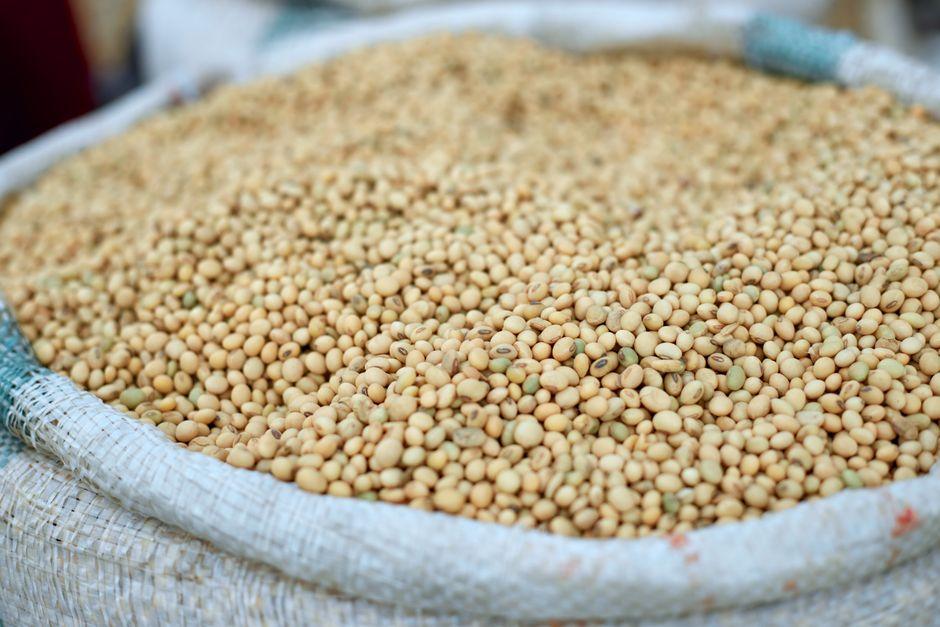
Agricultural commodities are physical goods traded on futures exchanges—corn, wheat, soybeans, coffee, sugar, cotton, and livestock. These contracts obligate the buyer to accept delivery (or cash settle) at a specified future date. Traders rarely take delivery; they close positions before expiration, capturing price moves without handling bushels of grain.
GBP/JPY is a currency pair representing the exchange rate between the British pound and the Japanese yen. It trades spot in the forex market, with no expiration, and reflects the relative strength of two central banks: the Bank of England and the Bank of Japan.
A concrete example: buying December corn futures means you’re betting on grain prices three months out, exposed to weather in the US Midwest, export demand from China, and USDA crop report surprises. Going long GBP/JPY means you’re betting the pound will strengthen against the yen—driven by interest rate differentials, risk sentiment, and macroeconomic data from the UK and Japan. The catalysts are completely different. The risk management required is equally different.
Why the Comparison Matters for Traders
Choosing between these markets isn’t about picking the “better” one. It’s about matching the market to your edge.
Agricultural commodities offer directional plays driven by supply disruptions, seasonal planting and harvest cycles, and geopolitical events affecting exports. The liquidity is decent at the front end of the curve—corn and soybeans on CME trade tight spreads—but thin out significantly for deferred months. Leverage is available but carries overnight exposure that can wipe out a position if the trade goes against you.
GBP/JPY offers superior liquidity for large positions, tighter spreads than most commodities, and the ability to hold indefinitely without rollover concerns (though swap rates apply). The pair is sensitive to global risk sentiment—during flight-to-safety episodes, the yen strengthens against almost everything, including GBP. The carry trade dynamic (borrowing in yen to buy pound-denominated assets) adds a structural bias that active traders must account for.
Ignore these differences and you’ll apply the wrong strategy to the wrong market. A trend-following system that works on GBP/JPY will get crushed by the violent mean-reversion in coffee futures. A supply-demand analysis that works on corn will miss entirely the interest rate dynamics driving GBP/JPY.
Core Concepts
Agricultural Futures Contract Specifications
Every agricultural futures contract has specific parameters that affect trading. Tick size—the minimum price movement—varies by commodity. Corn ticks at a quarter cent per bushel, meaning a $12.50 move per contract (50 bushels × $0.0025). Coffee ticks at $0.005 per pound, or $18.75 per contract (3,750 pounds × $0.005). These aren’t interchangeable numbers; they determine position sizing and risk per tick.
Margin requirements also differ dramatically. Initial margin for corn might run around $2,000 per contract, while coffee—far more volatile—requires significantly more. The exchange sets minimum margins, but brokers often require more depending on your account size and trading history. A trader treating coffee like corn will be margin-called within hours of a normal overnight gap.
Delivery months create seasonal opportunities. December corn and March soybeans have the highest open interest because they coincide with harvest completion and planting decisions. Trading outside these windows means wider spreads and thinner liquidity. If you’re scaling in and out of positions, front-month contracts are non-negotiable for most agricultural commodities.
Consider this scenario: a trader builds a position in December corn ahead of the USDA’s World Agricultural Supply and Demand Estimates report. They size the position using corn’s $12.50 tick value, risking 1% of a $50,000 account per tick. The report surprises—production estimates drop—and the market limit-up moves 25 cents in one session. That’s $1,250 per contract in a day. The same percentage risk on coffee, which moves $187.50 per tick, would blow out the account. Contract specifications aren’t just administrative details—they’re risk management variables.
GBP/JPY Carry Trade Mechanics
The carry trade works when you borrow in a low-yielding currency and invest in a higher-yielding one. With the Bank of England rate near 5% and the Bank of Japan at effectively zero, GBP/JPY embodies this dynamic. A trader selling the yen (borrowing it at near-zero) and buying pounds collects the differential in overnight swaps.
This isn’t free money. The carry works until it doesn’t. In 2008, when risk aversion spiked, the yen carry trade unwound violently—GBP/JPY dropped from over 250 to below 130 in months. The interest rate differential existed the entire time, but sentiment overwhelmed it. Carry is a tailwind, not a guarantee.
Current conditions make this relevant: the Bank of Japan has signaled potential policy normalization while the Bank of England holds rates steady. The differential has compressed from its post-Brexit highs. Traders who built positions assuming persistent carry are now reconsidering, especially as the yen strengthens on safe-haven flows and emerging BOJ hawkishness.
A practical application: holding GBP/JPY long through a Bank of England rate announcement carries directional risk that dwarfs the carry. If the BoE surprises with a dovish hold, the pair drops even if the interest rate differential. The carry doesn’t disappear—but it gets overwhelmed by the immediate reaction. Position sizing must account for this binary event risk.
Seasonal Supply-Demand Cycles Affecting Agricultural Price Action
Agricultural commodities follow predictable seasonal patterns tied to growing seasons, harvest timing, and inventory cycles. Corn peaks in summer as drought risk peaks, then drops during harvest as supply floods the market. Soybeans follow similar patterns, with weather scares in Brazil or Argentina adding international volatility.
Coffee is different—it trades on a multi-year cycle. Brazil’s Arabica trees produce heavily one year, then alternate to a lower-yield “off-year.” Combined with El Niño or La Niña weather patterns affecting Vietnam (Robusta) and Brazil (Arabica), coffee can trend for months without mean-reverting. A drought in Brazil’s coffee regions can send prices 30% higher in weeks.
Wheat trades with less seasonality but more geopolitical sensitivity. The Black Sea region dominates global wheat exports; any disruption—war, export bans, shipping bottlenecks—creates supply shocks that override normal seasonal patterns. A trader analyzing wheat purely on seasonal curves will miss these event-driven moves.
Here’s the practical angle: seasonal analysis tells you where the bias lies, not when to enter. December corn may historically rally into summer—but if global inventories are already high, the seasonal pattern fails. Use seasonality as a filter, not a signal. Combine it with inventory data, weather forecasts, and export pace to confirm the directional thesis.
Risk Sentiment Correlation Between Commodities and Forex Pairs
Risk-on environments see capital flow into higher-yielding currencies and “riskier” commodities (copper, crude oil, soybeans). Risk-off environments trigger flight to safety: the Swiss franc, Japanese yen, and US Treasuries rally. Agricultural commodities split this dynamic—grains often rise during inflation scares (risk-off for equities, but risk-on for real assets) but fall during global demand destruction.
GBP/JPY sits at an interesting intersection. It’s a carry pair that also serves as a risk barometer. When global markets panic, the yen strengthens aggressively against almost everything, including GBP. When risk appetite returns, the carry component dominates and GBP/JPY rallies. The same pair behaves differently depending on the broader market regime.
A concrete scenario: during the 2022 energy crisis, European growth slowed and risk aversion spiked. GBP/JPY fell from 170 to below 150—not because of the BoE-BoJ rate differential, but because the pound weakened on UK economic concerns while the yen strengthened on safe-haven demand. A carry trade that looked attractive in early 2022 became a value trap by mid-year.
Trading both asset classes means tracking correlation. If you’re long agricultural commodities, you should monitor GBP/JPY as a proxy for global risk appetite. A sudden yen strengthening often precedes commodity selloffs as leveraged positions get unwound. Conversely, commodity rallies in a risk-on environment often coincide with GBP/JPY strength.
Volatility Clustering and Its Impact on Position Sizing
Volatility clustering means that large price moves tend to cluster together—high-volatility periods persist, and low-volatility periods persist. This applies to both agricultural commodities and forex, but the clustering patterns differ in frequency and magnitude.
Agricultural commodities experience volatility clusters tied to events: USDA reports, weather anomalies, export announcements, and geopolitical disruptions. Between these events, volatility often collapses—corn can trade in a tight range for weeks, then explode on a production surprise. Position sizing for agricultural commodities must account for this asymmetry: small positions during calm periods that can scale up during volatility events.
GBP/JPY exhibits more continuous volatility, driven by overlapping economic data releases, central bank communications, and macro newsflow. The volatility clusters here are more “noisy” and harder to predict. A position sizing framework that assumes constant volatility will undersize during calm periods and oversize during volatile stretches.
The practical rule: calculate volatility using 20-day historical volatility for your target instrument, then size positions to risk a fixed percentage per unit of volatility. This normalizes risk across different regimes. If corn’s 20-day HV is 15% and GBP/JPY’s is 9%, a $50,000 account risking 1% ($500) per trade should trade roughly 0.67 corn contracts versus 0.56 GBP/JPY standard lots. The math changes the sizing decision entirely.
Step-by-Step Approach to Choosing Your Market
Step 1: Define Your Timeframe and Capital Base
Day traders and scalpers generally fare better in GBP/JPY—liquidity ensures tight spreads and minimal slippage during execution. Agricultural futures have wider spreads, especially outside front-month contracts, making frequent trading costly. If you trade on a 15-minute timeframe with dozens of entries daily, forex pairs like GBP/JPY are structurally more efficient.
Swing traders and position traders with larger capital bases can access agricultural futures. The overnight margin requirements and wider daily ranges compensate for the spread disadvantage, provided you’re not overtrading. A $100,000 account can comfortably trade agricultural futures; a $10,000 account will struggle with the margin requirements and volatility.
Step 2: Identify Your Edge and Information Advantage
Your edge determines the market, not the other way around. If you have access to weather data, crop yield models, or supply chain information relevant to agriculture, you’re playing to that strength. If you understand UK monetary policy, BoE communications, and can read global risk sentiment, forex offers a different edge.
Most retail traders have no genuine information advantage in either market. In that case, the framework shifts to execution efficiency and cost management. GBP/JPY’s tighter spreads and 24-hour liquidity make it easier to enter and exit at intended prices. Agricultural futures require more care with order placement, especially during volatile reports when markets can gap.
Step 3: Build a Risk Framework Matched to the Market
Agricultural commodities require wider stops because of their larger daily ranges. A corn position needs room to breathe through normal overnight moves that would stop out a tighter forex stop. The rule of thumb: stop distance should be at least 1.5 times the 20-day average true range for the commodity.
GBP/JPY allows tighter stops in normal conditions, but the risk is binary event exposure—a single BoE decision can move the pair 2-3% in hours. Position sizing must account for this tail risk even if most days trade quietly. A framework that works only in “normal” conditions will eventually blow up during an “abnormal” event.
After defining your risk framework, backtest across multiple regimes—not just the most recent year. Agricultural markets have multi-year cycles; forex pairs react differently to rate hike cycles versus rate cut cycles. If your backtest only covers 2022-2023, you’re testing one regime and assuming it represents all regimes.
Practical Tips for Better Results
- Use correlation analysis when trading both asset classes. If you’re long corn and short GBP/JPY, understand why these positions might both win or both lose depending on the macro environment.
- Monitor the VIX and US Treasury yields as leading indicators for GBP/JPY direction. Commodity-specific positioning matters less than global risk sentiment when the yen is involved.
- Size positions using volatility-normalized formulas rather than fixed contract counts. A position that risks 1% on corn may risk 0.5% on coffee—different volatilities require different sizes.
- Check agricultural export sales reports weekly. China buying patterns, Brazilian shipment volumes, and Russian export policies move markets in ways that price charts alone don’t capture.
- Track Bank of Japan policy communications more carefully than Bank of England when trading GBP/JPY. The BoJ’s potential normalization affects the carry trade dynamic fundamentally; the BoE moves matter, but the yen side has more structural change potential.
- Use limit orders instead of market orders in agricultural futures, especially around high-impact reports. The spread widens dramatically during volatility, and market orders can execute far worse than the quoted price.
- Maintain separate risk budgets for each asset class. If you allocate 60% of risk capital to commodities and 40% to forex, don’t let a losing commodity streak force you to overtrade forex to “make back” losses.
Common Mistakes to Avoid
- Applying forex position sizing to agricultural futures. The same dollar risk per trade produces wildly different exposures because the underlying instruments have different volatilities and contract sizes.
- Ignoring the carry component in GBP/JPY when calculating expected returns. A directionally correct trade that fights the carry will bleed slowly even if the thesis eventually plays out.
- Trading agricultural commodities without checking the USDA calendar. Report dates are known in advance; being flat ahead of major crop reports avoids unnecessary volatility exposure.
- Treating GBP/JPY as a purely directional play without accounting for risk sentiment. The pair can move against fundamental rate differentials for months during risk-off regimes.
- Over-leveraging agricultural futures because the margin requirements seem low. Initial margin is not the appropriate risk parameter—position size should be based on the full contract value and your risk tolerance.
- Holding agricultural futures over the weekend without accounting for gap risk. Monday opens can be dramatically different from Friday closes, especially after weather events or geopolitical developments.
Frequently Asked Questions
Is agricultural commodities trading more risky than forex?
Agricultural commodities tend to have higher individual price swings and wider daily ranges compared to major forex pairs. But risk depends more on position sizing and leverage than the asset class itself. A poorly sized forex position can cause the same percentage loss as a poorly sized commodity position. The key difference is that agricultural futures can gap significantly overnight, while forex pairs (except during weekend news) tend to reopen closer to their previous closes.
What affects GBP/JPY exchange rate movements?
GBP/JPY moves on three primary drivers: the interest rate differential between the Bank of England and the Bank of Japan, global risk sentiment (which strengthens the yen during market stress), and UK-specific economic data (GDP, inflation, employment). The BoJ’s policy stance is particularly influential because any shift in Japanese yields changes the carry trade dynamic fundamentally.
Can beginners trade agricultural commodity futures?
Beginners can trade agricultural futures, but they should start with the most liquid contracts—corn, soybeans, and wheat on CME—and use conservative position sizing. The learning curve includes understanding contract specifications, margin requirements, and the impact of USDA reports. Paper trading for a few months before committing capital helps beginners understand how these markets behave differently from forex or equities.
Which asset class offers better liquidity for large positions?
GBP/JPY offers superior liquidity for very large positions. Daily forex turnover in GBP/JPY runs into hundreds of billions of dollars; agricultural futures, while liquid at the front end, thin significantly for larger sizes, especially in deferred contract months. A trader looking to enter or exit a multi-contract position in corn will move the market more than in GBP/JPY.
How do interest rate decisions impact GBP/JPY trading?
Interest rate decisions from the Bank of England directly affect the carry component of GBP/JPY, while Bank of Japan decisions impact the yen side of the equation. The most volatile periods occur when there’s a surprise relative to market expectations—a dovish hold from the BoE when the market priced a hike will send GBP/JPY lower even if the interest rate differential. These events can produce 2-4% moves in hours.
What are the best agricultural commodities for new traders?
Corn and soybeans on CME offer the best combination of liquidity, tight spreads, and extensive available research. Wheat is also accessible, though it’s more sensitive to geopolitical events. Coffee and sugar have higher volatility and wider spreads—better suited once a trader understands the mechanics. Livestock futures (live cattle, lean hogs) involve additional complexity around contract specifications and delivery.
Conclusion
The choice between agricultural commodities and GBP/JPY isn’t about finding the “better” market—it’s about matching your trading approach to the market’s structural characteristics. GBP/JPY offers superior liquidity, tighter spreads, and continuous volatility suited to shorter timeframes. Agricultural futures provide directional opportunities driven by supply shocks, seasonal cycles, and weather events that create asymmetric volatility profiles.
Start with your capital, your timeframe, and your edge. If you need to trade frequently with small stops, forex makes structural sense. If you’re comfortable with wider stops and event-driven positions, agricultural futures offer opportunities that forex doesn’t capture. Most traders would benefit from understanding both—the correlation between these markets often provides hedge opportunities or confirms broader macro theses.
Whatever you choose, size positions based on volatility, not arbitrary dollar amounts. Risk management decides whether you survive long enough to profit. Without it, one bad week in either market wipes out months of gains.
—
Disclaimer: Trading involves substantial risk of loss. Past performance does not guarantee future results. This content is for educational purposes only and does not constitute financial advice.
Last reviewed: August 2026
This article is for educational purposes only and does not constitute investment advice. Trading and investing carry risk of loss; never invest more than you can afford to lose.