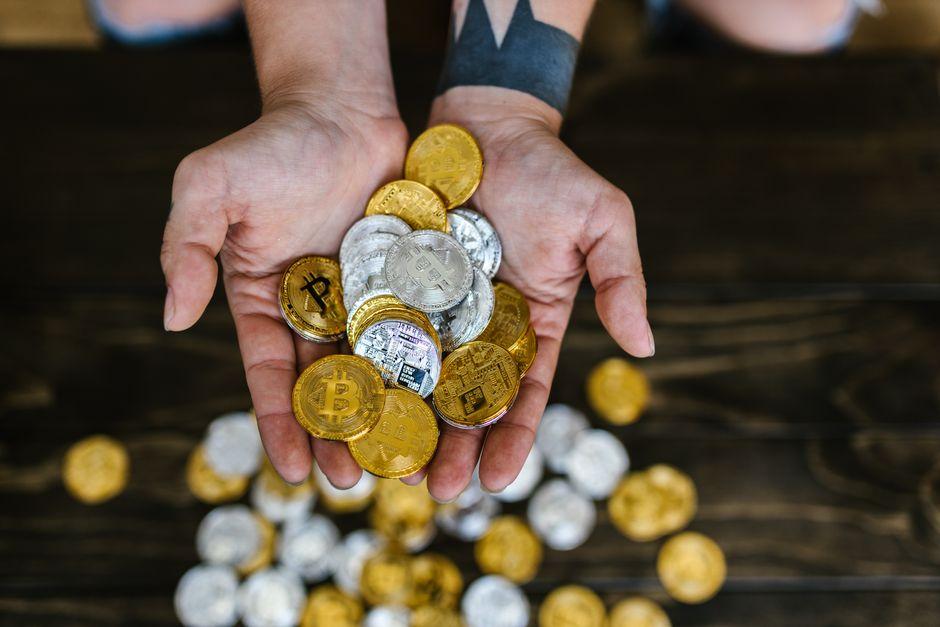
Best DeFi Practices for Portfolio Management

Management Playbook
Table of Contents
- Introduction
- What Are Best DeFi Practices for Portfolio Management
- Why Portfolio Management Matters in DeFi
- Step-by-Step Guide to Building a DeFi Portfolio
- Practical Tips for Better Results
- Common Mistakes to Avoid
- Frequently Asked Questions
- Conclusion
Introduction
Headline APY is the easiest number to find in crypto and the most misleading. Most of the failures that wiped out retail capital in past cycles were not yield problems in the traditional sense. They were portfolio problems: too much leverage, too little diversification, too much faith in unaudited contracts, and zero exit liquidity when the protocol itself cracked.
The best DeFi practices for portfolio management are not about chasing the highest return on a leaderboard. They are about building a structure that survives a stablecoin depeg, a smart contract exploit, a regulatory shock from the SEC, and a sudden Federal Reserve pivot away from risk assets. The mechanics differ from traditional finance, but the discipline is identical: define risk, size positions, hedge where possible, and keep dry powder for moments when liquidity disappears.
This playbook walks through how a serious investor can manage a crypto allocation across decentralized protocols. It covers liquidity provision on automated market makers, the trade-offs between yield farming and liquid staking, and the due diligence required to separate working protocols from exit scams. The goal is not to promise returns. It is to give you a framework durable enough to use across market cycles, the same kind of framework that institutional desks apply when sizing exposure to the Nasdaq, the S&P 500, or any other volatile asset class where correlations can flip in a single session.
What Are Best DeFi Practices for Portfolio Management
Best DeFi practices for portfolio management are a set of risk-aware methods for allocating, deploying, and rebalancing capital across decentralized finance protocols. They combine three layers: portfolio construction (how much goes where), protocol selection (which smart contracts deserve custody of your assets), and operational hygiene (how you monitor, hedge, and exit).
In practice, that means holding a mix of liquid staking tokens, lending positions, and selective liquidity provision rather than parking everything in a single farm. It means reading audit reports, checking on-chain governance history, and tracking total value locked (TVL) trends rather than trusting a project’s Twitter pitch. It also means using hardware wallets, revoking token allowances, and segmenting risk across multiple wallets so one exploit cannot drain an entire book.
A simple example: a $50,000 crypto allocation might split 40% into Lido stETH for liquid staking, 35% into Aave USDC lending, and 25% into a Curve 3-pool to hedge stablecoin depeg risk. Each position carries a different risk profile, a different return driver, and a different failure mode. That is the philosophy. The sections that follow explain the mechanics.
Why Portfolio Management Matters in DeFi
DeFi gives retail investors access to financial primitives that used to be reserved for hedge funds: leveraged lending, automated liquidity, synthetic assets, and programmable derivatives. The cost is that nearly every primitive is governed by a smart contract, and smart contracts fail.
Protocol insolvencies, oracle manipulations, and bridge hacks have historically wiped out more user capital than price crashes by themselves. A portfolio designed around headline APY without an understanding of smart contract risk, counterparty exposure, and liquidity withdrawal queues is essentially a margin loan to a developer team you have never met.
For active traders, the same logic applies. A spot position on Coinbase carries counterparty risk. A leveraged DeFi trade adds protocol risk, oracle risk, and liquidation cascade risk simultaneously. The job of portfolio management is to make sure that no single failure path can liquidate the entire book. That is the only durable edge in a market where new tokens launch every hour and airdrop farms go viral by Tuesday morning.
Automated Market Maker (AMM) Liquidity Provision and Impermanent Loss
Providing liquidity to an AMM like Uniswap or Curve is not the same as holding two tokens. The protocol constantly rebalances your position as traders swap in and out, which means you accumulate more of the losing asset and less of the winning one. That drag is called impermanent loss, and it can quietly erase the fees you earned.
Picture this: you deposit ETH and USDC into a Uniswap v3 pool with a concentrated range during a quiet, range-bound market. Fees accrue steadily. The day before a Federal Reserve rate decision, implied volatility on ETH options rises, the market co-moves with equities, and the price breaks out of your range. Your position is now almost entirely in the weaker asset and you have missed the directional move. Add the gas cost of rebalancing, and yield-focused income becomes a flat or negative return.
The mitigation is threefold: choose correlated pairs (USDC/USDT on Curve) where impermanent loss is structurally small, match your range to historical realized volatility, and exit before known event risk rather than after. Strong liquidity provision is more about range management than capital deployment. Treat the AMM like a market-making book: the spread is the fee, and the inventory risk is the price you pay for the right to collect it.
Yield Farming vs. Liquid Staking: Capital Efficiency Trade-offs
Yield farming and liquid staking are often grouped together as “DeFi yield,” but they are different animals. Yield farming pays you for taking liquidity, smart contract, and token-emission risk. Liquid staking pays you for securing a base-layer network like Ethereum in exchange for a base yield plus a transferable receipt token.
Liquid staking through Lido or Rocket Pool issues stETH or rETH, which can be redeployed as collateral in Aave or used in Curve pools. That recycling is the real capital efficiency play: you earn staking yield plus lending yield on the same underlying asset. The trade-off is a layer of smart contract risk on top of the base protocol.
Yield farming offers higher headline numbers but pairs them with token emissions that may collapse, pool rewards that can be diluted, and rug-pull risk if the team is anonymous. A practical rule: treat farming APY above roughly 10% as compensation for elevated risk, not as a free lunch. Anyone offering 50% APY in stables is either running a token subsidy or sitting on a smart contract bug.
The capital efficiency trade-off is real. Higher yield comes with higher correlation to the protocol’s own token, faster drawdowns, and harder exits. Liquid staking is the boring, lower-return core. Farming is the satellite, and satellites should be sized accordingly. If the satellite position blows up, the core still compounds at a pace that lets the portfolio recover.
Smart Contract Risk Auditing and Protocol Rug-Pull Indicators
Before any capital goes into a protocol, the smart contract needs to pass three filters: an audit by a reputable firm, time in production with measurable TVL, and on-chain governance that has actually been tested.
A single audit is necessary but not sufficient. Look for multiple audits, recent updates, and a bug bounty on Immunefi or similar platforms. Then check the protocol’s history: how did it handle past exploits, oracle failures, or governance attacks? A protocol that has survived a crisis with users made whole is more credible than one that has never been tested.
Red flags are easier to spot than green ones. Anonymous teams with no doxxed founders, locked liquidity that unlocks in less than a year, single-signer admin keys, low TVL paired with aggressive paid marketing, and copy-pasted code from unaudited forks are all warning signs. CoinGecko and DefiLlama can show TVL trends; a protocol losing TVL week over week is often the canary in the coalmine.
For institutional or larger allocations, the next step is formal verification, third-party monitoring via Forta or similar, and insurance coverage through Nexus Mutual when available. None of these eliminate smart contract risk. They cap it. The same logic applies to a corporate bond portfolio: credit ratings and CDS spreads reduce, but never erase, default exposure.
Step-by-Step Guide to Building a DeFi Portfolio
Step 1: Define Your Risk Bucket and Time Horizon
Before selecting a protocol, decide how much capital is risk-on, how much is risk-off, and how long you can lock it up. A 30% drawdown in liquid staking is recoverable; a 30% drawdown in a leveraged farming position is often a total loss. Match the position to the horizon, not the other way around.
The cleanest way to do this is to write down three numbers before you click “approve” on any transaction: the maximum drawdown you can tolerate, the time horizon for the position, and the exit trigger that takes you out regardless of the chart. Treasury yields and VIX levels can serve as external benchmarks for what “risk-on” actually means in the current cycle, since crypto correlations to rate-sensitive equities tend to tighten when real rates rise.
Step 2: Build the Core with Liquid Staking and Lending
Allocate roughly 60-70% of your DeFi book to a low-volatility core. For most investors, that means ETH or SOL liquid staking plus blue-chip lending on Aave or Compound. These positions compound steadily, have deep liquidity, and tend to recover from drawdowns rather than go to zero. They are the boring ballast that lets the rest of the book take risk.
Treat this layer the way a pension fund treats investment-grade credit. The yield is modest, the correlation to broader crypto risk is real but moderate, and the failure modes (depeg of LSTs, governance attack on a blue-chip lending market) tend to be systemic rather than idiosyncratic. When systemic risk does arrive, deep liquidity matters far more than headline APY.
Step 3: Add Satellite Yield and Liquidity Provision
With the core in place, allocate 20-30% to higher-yield strategies: selective liquidity provision on Curve or Balancer, conservative leveraged staking loops, or yield farming on protocols with multi-year operating histories. Treat this layer as risk capital. If it goes to zero, the portfolio survives.
Size each satellite position as a percentage of the total book, not of the satellite sleeve. A 5% allocation to a single farm is far more defensible than 50% of the high-yield sleeve. Position sizing is the difference between a drawdown and a margin call, the same way a 2% risk-per-trade rule keeps a directional book alive through losing streaks.
Step 4: Monitor, Rebalance, and Exit
Track positions weekly using Zapper, DeBank, or a custom dashboard. Revoke unused token allowances. Rebalance when one position grows past target. Exit when a protocol’s on-chain metrics deteriorate, when TVL falls, when governance activity drops, or when regulatory news (SEC, CFTC, FCA) targets the underlying primitive.
A useful rebalancing rule: take profits in the layer that has outperformed and redeploy into the layer that has underperformed, provided the thesis still holds. Selling the satellite after a 2x and rotating into the core after a 30% drawdown has historically been more profitable than letting winners run unchecked. Discipline beats conviction over a full market cycle.
Practical Tips for Better Results
Use a hardware wallet for any position larger than a few thousand dollars. Hot wallets are fine for trading; hardware wallets are the floor for custody.
Segregate risk across at least two wallets. One holds the core positions, the other holds experimental or farming capital. A single exploit should never be able to drain both.
Match the asset to the venue. Stablecoins belong in Curve or Aave, not in volatile AMM pools. ETH and LSTs belong in lending markets or correlated-pair pools, not in long-tail memecoin pairs.
Check token allowance visibility on Revoke.cash, and revoke allowances you no longer use. Allowance exploits have historically been a larger drain than protocol hacks.
Diversify across chains as well as protocols. Ethereum mainnet, Arbitrum, Base, and Solana each carry different risk profiles and different smart contract footprints. Bridge risk also varies by route, so concentration in a single bridge is a quiet single point of failure.
Treat governance tokens as risk-on equity, not yield. Their “APY” is paid in a token whose value may collapse well before you can claim it.
Keep 5-10% of the book in stablecoins off any protocol. Liquidity is a feature. When depegs happen (look at the 2022 UST unwind), being able to buy the dip from dry powder is the entire game.
Common Mistakes to Avoid
Chasing the highest APY. The yield curve is a risk curve. The top of the leaderboard is where capital goes to die.
Ignoring impermanent loss. A 20% price divergence between paired assets can wipe out a year of fees. The naming is misleading; the loss is very permanent if you exit at the wrong moment.
Using a single hot wallet for the entire book. One phishing link or one malicious approval ends the portfolio. Hardware wallet plus cold storage is not optional for serious capital.
Skipping protocol due diligence. Anonymous teams, single-signer admin keys, and unaudited forks are warning signs. If you cannot read the audit, you cannot evaluate the risk.
Over-leveraging staking loops. Recursive staking can amplify yield, but it also amplifies liquidation risk if the borrow rate spikes. Liquidity crunches do not warn you first.
Treating stablecoins as risk-free. Tether, USDC, and DAI have all had stress events. Diversify across at least two high-quality stablecoins, and avoid algorithmic stablecoins for any meaningful allocation.
Frequently Asked Questions
What are the best DeFi practices for beginners managing a crypto portfolio?
Start with a hardware wallet and a conservative core: roughly 60-70% in liquid staking and blue-chip lending, 20-30% in selective yield strategies, and 5-10% in stablecoin dry powder. Avoid leveraged loops and unaudited protocols until you understand the failure modes. Use DefiLlama and Revoke.cash as routine tools.
How do you reduce risk when yield farming in DeFi?
Diversify across protocols, cap exposure to any single farm at a small percentage of the book, prioritize audited and time-tested contracts, and harvest rewards regularly rather than compounding emissions into a single token. Watch TVL trends and governance activity for early warning signs.
Is DeFi portfolio management safer than holding tokens on an exchange?
It depends on the exchange and the protocols. Centralized exchanges carry counterparty risk (remember Mt. Gox and FTX). DeFi carries smart contract, oracle, and governance risk. A diversified allocation across both, with the majority in self-custody, generally compares favorably to a single venue.
What is impermanent loss and how does it affect DeFi returns?
Impermanent loss is the gap between holding two assets and providing them as liquidity to an AMM. As the price ratio between the assets changes, the protocol rebalances toward the weaker asset, leaving the LP with less of the winner. The “loss” is the difference between the LP’s value and a simple buy-and-hold. It only becomes permanent if you withdraw at the wrong time.
Can you lose all your money using DeFi practices?
Yes. Smart contract exploits, oracle manipulations, governance attacks, and stablecoin depegs have historically wiped out 100% of user funds in multiple protocols. Even conservative strategies carry risk. Position sizing and diversification are the only real protections.
Which DeFi protocols are best for passive income in 2024?
For conservative income, Lido (liquid staking), Aave (lending), and Curve (stablecoin pools) remain the most liquid and time-tested options. For higher yield, Convex and Frax have shown durability. Always verify current TVL, audit status, and governance activity before allocating. APY rankings change; protocol risk rankings are more stable.
Conclusion
The single most important lesson in DeFi portfolio management is that yield is a compensation for risk, not a free lunch. Markets reward risk-takers who understand what they are buying. They punish those who do not.
A practical next step: open DefiLlama, audit your current positions, and check whether any of them satisfy the three filters (audit, track record, governance). If not, rotate into protocols that do. Document your risk bucket, your rebalancing rules, and your exit triggers before the next volatility event, not during it.
Crypto carries significant risk, returns are not guaranteed, and self-custody means self-responsibility. Manage the risk, and the returns will follow over time. Ignore the risk, and the next cycle will be a lesson you did not want to learn.
—
This article is for educational purposes only and does not constitute investment advice. Trading and investing carry risk of loss; never invest more than you can afford to lose.
Editorial byline: Last reviewed December 2025.
Last reviewed: August 2026